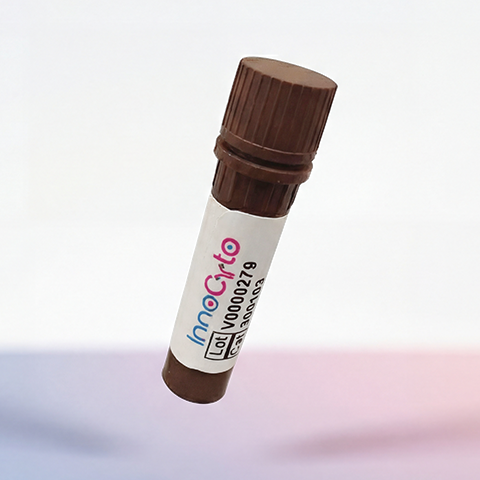
| Cat # | Size | Price | Quantity | |
|---|---|---|---|---|
| 502601 | 1 mg | $250 | ||
| 502602 | 5 mg | $650 | ||
| 502603 | 20 mg | $2000 |
| Clone | Epratuzumab |
|---|---|
| Application | Flow cytometry, animal model study |
| Host Species | Mammalian cells |
| Reactivity | Human |
| Format | Liquid |
| Product Description | Epratuzumab Biosimilar, CD22 Monoclonal Antibody |
| Isotype | Human IgG1 |
| Regulatory Status | RUO |
| Clonality | Recombinant |
| Immunogen | Human CD22 |
| Species specificity | Human |
| Purity | >95% by reducing SDS-PAGE |
| Grade | In vivo |
| Storage Conditions | 4ºC |
| Maximal Shelf Life | 12 months |
| Synonyms | Siglec-2 |
| Target Name | CD22, BL-CAM, Siglec-2 |
| Antibody Type | Recombinant |
| Research Areas | B cells, Cancer Marker |
| See All Formats | Clone Epratuzumab |
Epratuzumab is a humanized monoclonal antibody that belongs to the immunoglobulin G1 kappa (IgG1κ) subclass and is engineered to target CD22, a transmembrane glycoprotein expressed primarily on B lymphocytes. Structurally, Epratuzumab is a recombinant glycoprotein with a molecular mass of approximately 145 to 150 kilodaltons (kDa). The molecule is composed of two identical heavy chains and two identical light chains connected by interchain disulfide bonds, forming the characteristic Y-shaped antibody configuration typical of IgG immunoglobulins. Each heavy chain contains one variable (VH) domain and three constant regions (CH1-CH3), and each light chain comprises one variable (VL) and one constant (CL) domain. The antibody is produced in mammalian expression systems, such as Chinese Hamster Ovary (CHO) cells, ensuring proper glycosylation and folding necessary for biological stability and activity.
The antigen-binding regions of Epratuzumab, located within the complementarity-determining regions (CDRs) of the VH and VL domains, are derived from murine antibody sequences engineered into a human IgG framework to achieve specific recognition of CD22. This epitope binding occurs with high affinity through non-covalent interactions, including hydrogen bonding and van der Waals forces. CD22, a member of the sialic acid-binding immunoglobulin-like lectin (Siglec) family, functions as an inhibitory coreceptor that modulates B-cell receptor (BCR) signaling. Upon binding to CD22, Epratuzumab influences intracellular signaling dynamics by promoting receptor internalization and partial modulation of downstream pathways involving calcium mobilization and phosphatase recruitment, such as SHP-1 activation in experimental systems.
The Fc (fragment crystallizable) region of Epratuzumab contributes to its stability and pharmacokinetic properties through interactions with neonatal Fc receptors (FcRn), which extend circulating half-life. As an IgG1 molecule, it can also interact with Fc gamma receptors (FcγRs), enabling potential effector functions like limited antibody-dependent cellular cytotoxicity (ADCC) under defined experimental conditions. Overall, Epratuzumab exemplifies a rationally engineered humanized antibody structure optimized for selective targeting of B-cell surface receptors and modulation of immune-signaling pathways in molecular and cellular studies.
Anti-Human CD22 (Epratuzumab Biosimilar) TDS
Anti-Human CD19 Antibody, Clone HIB19
iF560 Anti-Human CD19 Antibody, Clone HIB19
iF647 Anti-Human CD19 Antibody, Clone 019AM2b
Biotin Anti-Human CD19 Antibody, Clone 019AM2b
Human CD22 Protein (C-His-Avi)
Biotin Human CD22 Protein (C-His-Avi)
Biotin Human CD22 Protein (C-Fc-Avi)
Have a product or application question? Consult our FAQs or contact us.