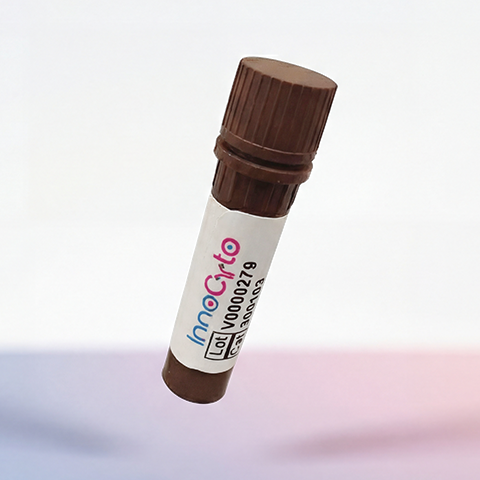
| Cat # | Size | Price | Quantity | |
|---|---|---|---|---|
| 501701 | 1 mg | $250 | ||
| 501702 | 5 mg | $750 | ||
| 501703 | 20 mg | $2000 |
| Clone | Daclizumab |
|---|---|
| Application | Flow cytometry, animal model study |
| Host Species | Mammalian cells |
| Reactivity | Human |
| Format | Liquid |
| Product Description | Anti-Human CD25 (Daclizumab Biosimilar) |
| Isotype | Human IgG1 |
| Regulatory Status | RUO |
| Clonality | Recombinant |
| Immunogen | Human CD25 |
| Species specificity | Human |
| Purity | >95% by reducing SDS-PAGE |
| Grade | In vivo |
| Storage Conditions | 4ºC |
| Maximal Shelf Life | 12 months |
| Synonyms | IL-2Ra, IL-2 Receptor alpha |
| Target Name | IL-2 receptor α chain, Low affinity IL-2R, IL-2Rα chain |
| Antibody Type | Recombinant |
| Research Areas | T cells, Tregs, T cell Activation, Adaptive Immunity, Autoimmunity, Cancer Marker, Dendritic cells |
| See All Formats | Clone Daclizumab |
Daclizumab is a humanized monoclonal antibody that belongs to the immunoglobulin G1 (IgG1) subclass and was engineered to selectively bind to the interleukin-2 receptor alpha chain (IL-2Rα, also known as CD25) on the surface of activated T lymphocytes. Structurally, it is composed of two identical heavy chains and two identical light chains connected by disulfide bonds to form the characteristic Y-shaped antibody configuration. The molecule has a molecular weight of approximately 144 kilodaltons (kDa) and is produced using recombinant DNA technology in mammalian expression systems, ensuring proper folding, glycosylation, and disulfide linkage formation.
The variable domains of the heavy (VH) and light (VL) chains in Daclizumab contain complementarity-determining regions (CDRs) derived from murine antibody sequences that confer antigen-binding specificity. These CDRs form the paratope, which recognizes and binds with high affinity to an epitope on the IL-2Rα subunit. The constant regions of the antibody are of human origin, resulting in a humanized structure that maintains antigen specificity while enhancing stability and reducing non-native immunogenic residues. When Daclizumab engages CD25, it sterically hinders the binding of interleukin-2 (IL-2) to its high-affinity receptor complex (composed of CD25, CD122, and CD132 subunits). This interruption modulates downstream signaling cascades involving the JAK-STAT pathway, thereby influencing T-cell proliferation and activation in experimental systems that model cytokine signaling.
The Fc domain of Daclizumab, characteristic of IgG1 molecules, contributes to molecular stability, prolongs systemic persistence through interaction with the neonatal Fc receptor (FcRn), and allows potential binding to Fc gamma receptors (FcγRs) with limited effector function. The antibody’s glycosylation at conserved asparagine residues within the CH2 domain supports proper structural conformation and solubility. Overall, Daclizumab exemplifies a rationally engineered monoclonal antibody that combines precise receptor targeting with optimized immunoglobulin architecture to elucidate cytokine-receptor signaling and T-cell regulation mechanisms in molecular immunology research.
Anti-Human CD25 (Daclizumab Biosimilar) TDS
Anti-Human CD4 Antibody, Clone 004AB
iF488 Anti-Human CD4 Antibody, Clone OKT4-Rec
iF647 Anti-Human CD4 Antibody, Clone OKT4-Rec
PE Anti-Human CD4 Antibody, Clone RPA-T4
Cynomolgus CD25 (IL-2Rα) Protein (C-His-Avi)
Biotin Cynomolgus CD25 (IL-2Rα) Protein (C-His-Avi)
Cynomolgus CD25 (IL-2Rα) Protein (C-His)
PE Cynomolgus CD25 (IL-2Rα) Protein (C-His)
APC Cynomolgus CD25 (IL-2Rα) Protein (C-His)
Human CD25 (IL-2R) Protein (C-Fc-Avi)
Have a product or application question? Consult our FAQs or contact us.