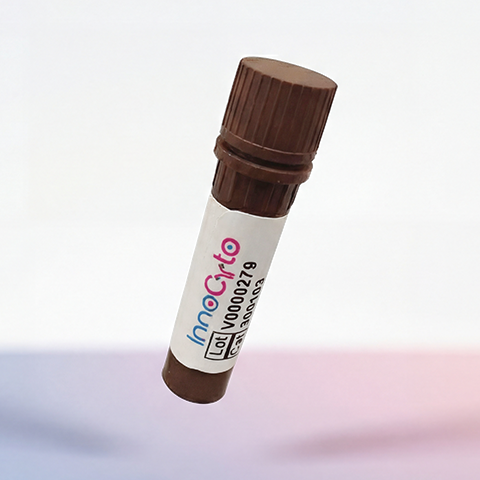
| Cat # | Size | Price | Quantity | |
|---|---|---|---|---|
| 502001 | 1 mg | $250 | ||
| 502002 | 5 mg | $750 | ||
| 502003 | 20 mg | $2000 |
| Clone | Drozitumab |
|---|---|
| Application | Flow cytometry, animal model study |
| Host Species | Mammalian cells |
| Reactivity | Human |
| Format | Liquid |
| Product Description | Anti-Human DR5 (Drozitumab Biosimilar) |
| Isotype | Human IgG1 |
| Regulatory Status | RUO |
| Clonality | Recombinant |
| Immunogen | Human DR5 |
| Species specificity | Human |
| Purity | >95% by reducing SDS-PAGE |
| Grade | In vivo |
| Min Sample Size | 1 mg |
| Storage Conditions | 4ºC |
| Maximal Shelf Life | 12 months |
| Synonyms | TNFRSF10B |
| RRID | AB_3739296 |
| Target Name | CD262, DR5, TRAIL-R2, KILLER, TRICK2, Ly98, TNFRSF10B |
| Antibody Type | Recombinant |
| Research Areas | Cancer Marker, Monocytes, Neutrophils, B cells |
| See All Formats | Clone Drozitumab |
Drozitumab, also known as PRO95780, is a fully human monoclonal antibody belonging to the immunoglobulin G1 (IgG1) subclass, designed to target death receptor 5 (DR5), also known as tumor necrosis factor receptor superfamily member 10B (TNFRSF10B). Structurally, Drozitumab consists of two identical heavy chains and two identical light chains linked by disulfide bonds, forming a Y-shaped configuration typical of immunoglobulins with a molecular weight of approximately 150 kilodaltons (kDa). It is produced using mammalian recombinant expression systems to ensure proper protein folding, assembly, and glycosylation. The molecule’s heavy and light chains contain variable domains that form the antigen-binding sites, each consisting of complementarity-determining regions (CDRs) responsible for recognizing the DR5 epitope.
Drozitumab binds specifically and with high affinity to DR5, a cell-surface receptor that functions as part of the extrinsic apoptosis signaling pathway. DR5 is one of the receptors that recognize tumor necrosis factor–related apoptosis-inducing ligand (TRAIL). By mimicking the binding of endogenous TRAIL, Drozitumab acts as an agonistic antibody, promoting receptor trimerization, a process essential for activating downstream apoptotic signaling cascades. Upon receptor clustering, DR5 recruits adaptor proteins such as FADD (Fas-associated death domain) and initiates the assembly of the death-inducing signaling complex (DISC). This complex activates initiator caspases (particularly caspase-8), which in turn cleave and activate effector caspases (e.g., caspase-3) that execute apoptotic cell death.
The Fc region of Drozitumab provides molecular stability and may facilitate interactions with Fc gamma receptors (FcγRs), allowing immune-mediated effects such as crosslinking that enhance receptor clustering in vitro. Its structural design exemplifies the use of human IgG1 frameworks to combine precise antigen targeting, structural durability, and effective signal initiation. Overall, Drozitumab serves as a well-defined model of an agonistic monoclonal antibody engineered for selective engagement of the TRAIL-DR5 apoptotic pathway in molecular and cell death signaling research.
Anti-Human DR5 (Drozitumab Biosimilar) TDS
Have a product or application question? Consult our FAQs or contact us.