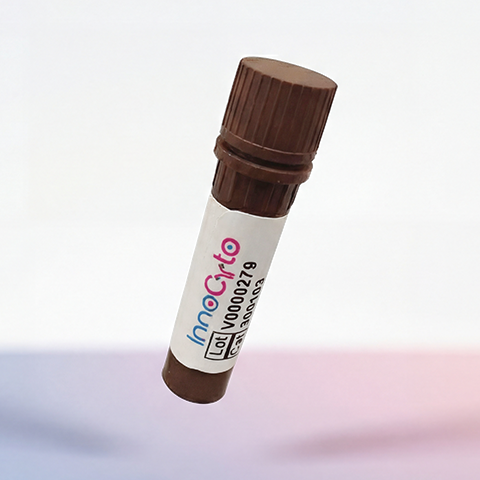
| Cat # | Size | Price | Quantity | |
|---|---|---|---|---|
| 500101 | 1 mg | $250 | ||
| 500102 | 5 mg | $750 | ||
| 500103 | 20 mg | $1800 |
| Clone | Abciximab |
|---|---|
| Application | Flow cytometry, animal model study |
| Host Species | Mammalian cells |
| Reactivity | Human |
| Format | Liquid |
| Product Description | Abciximab Biosimilar, Glycoprotein IIb/IIIa Receptor Monoclonal Antibody |
| Isotype | Human IgG1 Fab |
| Regulatory Status | RUO |
| Clonality | Recombinant |
| Immunogen | Human Glycoprotein IIb/IIIa Receptor |
| Species specificity | Human |
| Purity | >95% by reducing SDS-PAGE |
| Grade | In vivo |
| Min Sample Size | 1 mg |
| Storage Conditions | 4ºC |
| Maximal Shelf Life | 12 months |
| Synonyms | GPIIb, GPIIIa |
| RRID | AB_3739278 |
| Target Name | CD41/CD61 |
| Antibody Type | Recombinant |
| Research Areas | Platelets, Clotting |
| See All Formats | Clone Abciximab |
Abciximab is a chimeric monoclonal antibody fragment developed to selectively bind and inhibit specific integrin receptors on platelet surfaces. Structurally, it is the Fab (antigen-binding) fragment of the monoclonal antibody 7E3, designed using recombinant DNA technology. This antibody originates from a murine (mouse) immunoglobulin engineered to contain both murine variable regions and human constant regions, resulting in a chimeric composition that combines high specificity with structural compatibility to human proteins. The molecule has a molecular mass of approximately 47.6 kilodaltons (kDa) and maintains the typical immunoglobulin Fab architecture, comprising one complete light chain and the variable and first constant domains of the heavy chain, connected via disulfide bonds.
Functionally, Abciximab exerts its activity through high-affinity binding to the glycoprotein (GP) IIb/IIIa receptor complex, also known as integrin αIIbβ3, on platelets. This receptor plays a crucial role in mediating platelet aggregation by serving as the final common pathway for fibrinogen, von Willebrand factor, and other adhesive ligand binding. By occupying the ligand-binding sites of this integrin complex, Abciximab sterically hinders the interaction between platelets and adhesive molecules, effectively inhibiting crosslinking and aggregation processes. In addition to the αIIbβ3 receptor, Abciximab also displays binding affinity toward related integrins such as αvβ3 and Mac-1 (CD11b/CD18), contributing to its ability to modulate a wider range of cell adhesion phenomena in research contexts.
At the molecular level, Abciximab's binding is non-competitive and characterized by slow dissociation kinetics, allowing the molecule to remain attached to its receptor targets for extended periods. The interaction occurs mainly through complementarity-determining regions (CDRs) located in the antibody’s variable domains, which recognize specific conformational epitopes on the integrin surface. Through these mechanisms, Abciximab provides a precise biochemical model for investigating integrin-mediated signaling, receptor-ligand dynamics, and the molecular regulation of platelet adhesion and aggregation.
Anti-Human GP IIb/IIIa (Abciximab Biosimilar) TDS
PE Anti-Mouse/Human CD11b (Integrin αM) Antibody, Clone M1/70
Have a product or application question? Consult our FAQs or contact us.