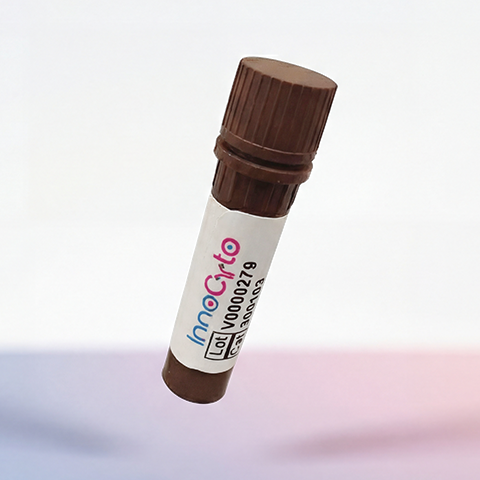
| Cat # | Size | Price | Quantity | |
|---|---|---|---|---|
| 113101 | 25 ug | $95 | ||
| 113102 | 100 ug | $230 |
| Clone | C38 |
|---|---|
| Application | Flow Cytometry |
| Reactivity | Human |
| Format | Purified |
| Target Name | GRP-78, HSPA5, BiP, Endoplasmic reticulum lumenal Ca(2+)-binding protein grp78, Immunoglobulin heavy chain-binding protein |
| Isotype | Mouse IgG2b |
| Antibody Type | Monoclonal |
| Regulatory Status | RUO |
| Formulation | Phosphate-buffered solution, pH 7.2, containing 0.09% sodium azide |
| Protein Concentration | 0.5 mg/mL |
| Storage&Handling | The antibody solution should be stored between 2°C and 8°C |
| Research Areas | Cancer Marker, Hypoxia, Metabolism, Infectious Diseases, Inflammation |
| See All Formats | Clone C38 |
GRP78, also known as BiP or HSPA5, is a key molecular chaperone belonging to the heat shock protein 70 (HSP70) family. It is predominantly localized in the endoplasmic reticulum (ER), where it plays a central role in protein folding, assembly, and quality control. GRP78 is also a master regulator of the unfolded protein response (UPR), a cellular stress pathway activated under conditions such as hypoxia, nutrient deprivation, or accumulation of misfolded proteins. By binding to ER stress sensors, GRP78 maintains them in an inactive state under normal conditions and releases them upon stress to initiate adaptive signaling.
Structurally, GRP78 consists of two major functional domains: an N-terminal ATPase domain and a C-terminal substrate-binding domain. The ATPase domain hydrolyzes ATP to regulate the chaperone cycle, while the substrate-binding domain interacts with unfolded or misfolded polypeptides. A C-terminal KDEL sequence ensures its retention within the ER lumen. Under certain pathological conditions, GRP78 can also be translocated to the cell surface or secreted extracellularly, where it acquires additional signaling functions.
GRP78 interacts with a wide range of ligands, including nascent polypeptides, misfolded proteins, and ER stress sensors such as PERK, IRE1, and ATF6. When expressed on the cell surface, it can bind extracellular ligands such as α2-macroglobulin, Cripto, and certain viral proteins, mediating signaling pathways that influence cell survival, proliferation, and immune responses.
In disease, GRP78 is frequently upregulated in cancer, where it promotes tumor cell survival, resistance to apoptosis, metastasis, and therapy resistance. It is also implicated in neurodegenerative disorders, metabolic diseases, and viral infections due to its central role in protein homeostasis and stress responses.
Therapeutically, GRP78 is an attractive target for cancer treatment. Strategies include small molecules, antibodies, and peptides that inhibit its function or target GRP78-expressing cells, particularly those displaying GRP78 on their surface. Modulating GRP78 activity may also have potential in treating diseases associated with ER stress and protein misfolding.
Mouse IgG2b Isotype Control Antibody
Have a product or application question? Consult our FAQs or contact us.