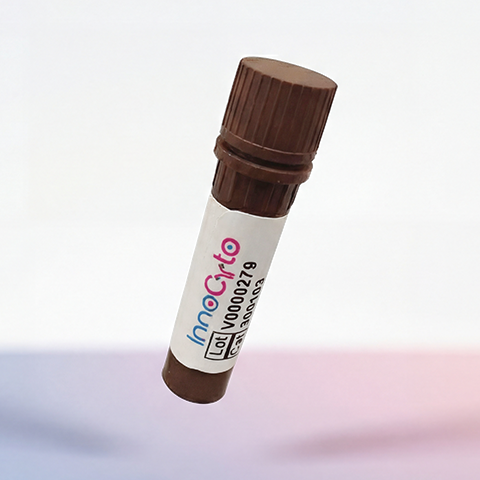
| Cat # | Size | Price | Quantity | |
|---|---|---|---|---|
| 504401 | 1 mg | $175 | ||
| 504402 | 5 mg | $590 | ||
| 504403 | 20 mg | $1800 |
| Clone | Omalizumab |
|---|---|
| Application | Flow cytometry, animal model study |
| Host Species | Mammalian cells |
| Reactivity | Human |
| Format | Liquid |
| Product Description | Omalizumab Biosimilar, Human IgE Monoclonal Antibody |
| Isotype | Human IgG1 |
| Regulatory Status | RUO |
| Clonality | Recombinant |
| Immunogen | Human IgE |
| Species specificity | Human |
| Purity | >95% by reducing SDS-PAGE |
| Grade | In vivo |
| Storage Conditions | 4ºC |
| Maximal Shelf Life | 12 months |
| RRID | AB_3739320 |
| Target Name | IgE, Immunoglobulin E |
| Antibody Type | Recombinant |
| Research Areas | Allergy, Infectious Diseases, Mast cells, Basophils, Monocytes, Dendritic cells |
| See All Formats | Clone Omalizumab |
Omalizumab is a recombinant humanized monoclonal antibody that belongs to the immunoglobulin G1 kappa (IgG1κ) subclass. It was engineered to specifically bind to human immunoglobulin E (IgE), the antibody class central to allergic responses. Structurally, Omalizumab is a glycoprotein with a molecular weight of approximately 149 kilodaltons (kDa), composed of two identical heavy chains and two identical light chains linked by disulfide bonds to form the canonical Y-shaped configuration characteristic of IgG antibodies. The molecule is expressed in mammalian cell systems, such as Chinese Hamster Ovary (CHO) cells, to ensure proper protein folding, glycosylation, and structural stability compatible with human antibodies.
The antigen-binding fragments (Fab) contain variable heavy (VH) and variable light (VL) domains that include complementarity-determining regions (CDRs). These CDRs form the paratope responsible for the high-affinity recognition of a specific epitope located within the Cε3 domain of the Fc portion of free IgE. This binding site is distinct from the IgE region that interacts with the high-affinity FcεRI receptor on mast cells and basophils. By binding to circulating IgE, Omalizumab forms immune complexes that reduce available free IgE levels and prevent IgE from attaching to FcεRI and FcεRII (CD23) receptors. In experimental systems, this results in downregulation of FcεRI expression and diminished IgE-mediated signaling, which includes the inhibition of receptor crosslinking and subsequent intracellular calcium mobilization and mediator release.
The Fc (fragment crystallizable) region of Omalizumab is derived from human IgG1 and primarily provides structural integrity and extended half-life through neonatal Fc receptor (FcRn) recycling. Unlike many IgG1 antibodies, it exhibits minimal effector functions such as complement activation or antibody-dependent cellular cytotoxicity (ADCC). Overall, Omalizumab exemplifies precision antibody design, combining specific antigen neutralization with structural and pharmacokinetic stability to selectively modulate IgE-mediated pathways in immunological research.
Anti-Human IgE (Omalizumab Biosimilar) TDS
Have a product or application question? Consult our FAQs or contact us.