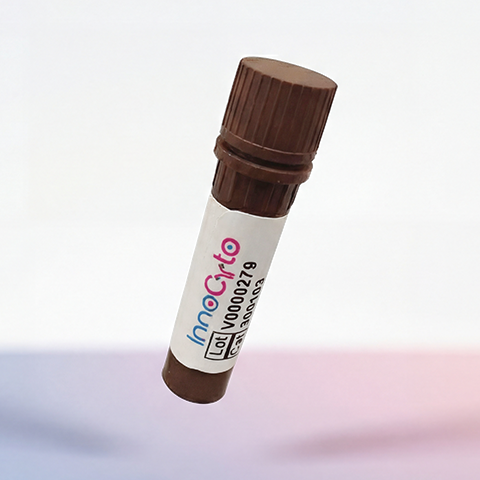
| Cat # | Size | Price | Quantity | |
|---|---|---|---|---|
| 500301 | 1 mg | $125 | ||
| 500302 | 5 mg | $400 | ||
| 500303 | 20 mg | $800 |
| Clone | Adalimumab |
|---|---|
| Application | Neutralization, Intracellular Flow cytometry, animal model study |
| Host Species | Mammalian cells |
| Format | Liquid |
| Product Description | Anti-Human TNFα (Adalimumab Biosimilar) |
| Isotype | Human IgG1 |
| Regulatory Status | RUO |
| Clonality | Recombinant |
| Immunogen | Human TNF alpha |
| Clone Number | D2E7 |
| Species specificity | Human |
| Purity | >95% by reducing SDS-PAGE |
| Grade | In vivo |
| Storage Conditions | 4ºC |
| Maximal Shelf Life | 12 months |
| Synonyms | TNFa, TNF-alpha |
| See All Formats | Clone Adalimumab |
Adalimumab is a fully human monoclonal antibody that belongs to the immunoglobulin G1 (IgG1) subclass. It was developed using recombinant DNA technology in mammalian cell expression systems, such as Chinese Hamster Ovary (CHO) cells, to ensure proper protein folding, glycosylation, and functional integrity. Structurally, Adalimumab is a 148-kilodalton (kDa) glycoprotein composed of two identical heavy chains and two identical light chains connected by disulfide bonds, resulting in a typical Y-shaped antibody configuration. Each heavy chain consists of variable and constant regions, including CH1, CH2, and CH3 domains, while each light chain contains one variable and one constant domain. The molecule contains N-linked glycosylation sites in the Fc region, which contribute to stability, solubility, and interactions with immune effectors.
The functional activity of Adalimumab derives from its high-affinity binding to tumor necrosis factor-alpha (TNF-α), a proinflammatory cytokine involved in immune signaling and regulation. Each Fab fragment of Adalimumab contains complementarity-determining regions (CDRs) that specifically recognize and bind to soluble and transmembrane forms of human TNF-α with nanomolar affinity. By binding tightly to TNF-α, the antibody prevents the cytokine from interacting with its cellular receptors, TNFR1 (p55) and TNFR2 (p75), effectively blocking downstream signaling pathways that lead to the expression of inflammatory mediators, adhesion molecules, and other immune-regulatory proteins.
In addition to its antigen-binding capacity, Adalimumab’s Fc region mediates secondary molecular interactions important for immune modulation. These include binding to neonatal Fc receptors (FcRn), which extend the antibody’s circulatory half-life by protecting it from lysosomal degradation, and engagement with Fc gamma receptors (FcγRs), though Adalimumab is engineered to minimize undesired effector functions such as complement activation. Overall, Adalimumab represents a well-characterized biologic molecule whose precise molecular architecture enables high target specificity, structural stability, and controlled immunomodulatory function in research applications studying cytokine signaling and immune regulation.
Anti-Human TNFα (Adalimumab Biosimilar) TDS
Anti-Human TNF alpha (Infliximab Biosimilar), Clone Infliximab
Have a product or application question? Consult our FAQs or contact us.