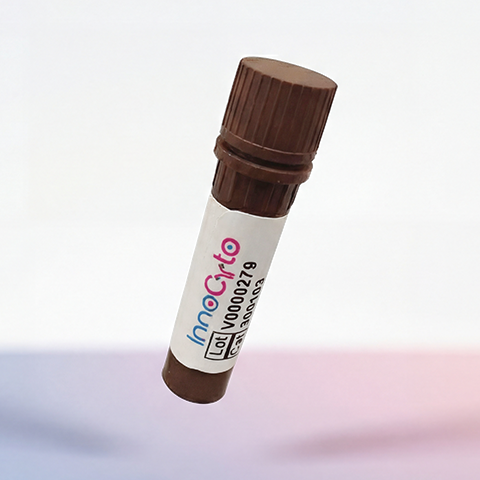
| Cat # | Size | Price | Quantity | |
|---|---|---|---|---|
| 814503 | 25 ug | $245 | ||
| 814504 | 100 ug | $595 |
| Application | Flow Cytometry |
|---|---|
| Format | Liquid, APC |
| Expression Host | CHO |
| Target Name | EphA2 |
| Species | Human |
| Sources | Recombinant Human EphA2 (Gln25-Asn534) with C-terminus His-tag is expressed in CHO cell and conjugated to APC. |
| Accession Number | P29317 |
| Molecular Weight | The protein has a predicted molecular weight of 57.7 kDa. Under DTT-reducing conditions, it migrates at approximately 60 kDa on SDS-PAGE prior to conjugation. |
| Affinity Tag | C-His |
| Regulatory Status | RUO |
| Formulation | 1xPBS buffer, pH7.4, 0.09% NaN3 with a carrier protein |
| Endotoxin level | Not tested |
| Protein Concentration | 25µg size is bottled at 0.1mg/mL concentration. 100 µg size is bottled at lot specific concentration. |
| Storage and Handling | Briefly centrifuge the vial upon receipt. An unopened vial may be stored at 2–8°C for up to six months. |
| Research Areas | Cancer Marker, Epithelial cells |
I'll search for information about EphA2 to provide you with an accurate summary.
EphA2 (ephrin type-A receptor 2) is a receptor tyrosine kinase belonging to the largest family of receptor tyrosine kinases, the Eph receptor family. EphA2 plays critical roles in cell-cell communication, regulating processes such as cell migration, adhesion, proliferation, and differentiation during embryonic development and tissue homeostasis. The protein is expressed in various normal tissues, particularly in epithelial cells, endothelial cells, and neural tissues, where it mediates contact-dependent signaling between adjacent cells. EphA2 functions through bidirectional signaling: forward signaling occurs when ephrin ligands bind to EphA2, triggering kinase activation and downstream signaling in the receptor-bearing cell, while reverse signaling transmits signals back into the ephrin-expressing cell. This bidirectional communication is essential for developmental processes including angiogenesis, axon guidance, and tissue boundary formation.
Structurally, EphA2 is a transmembrane protein of approximately 130 kDa consisting of several distinct domains. The extracellular region contains an N-terminal ligand-binding domain, a cysteine-rich region, and two fibronectin type III repeats that facilitate receptor oligomerization and ligand interaction. The protein also features a single transmembrane domain and an intracellular region containing a juxtamembrane segment, a tyrosine kinase domain, a sterile alpha motif (SAM) domain, and a PDZ-binding motif at the C-terminus. Upon ligand binding, EphA2 undergoes autophosphorylation at multiple tyrosine residues in the kinase domain and juxtamembrane region, creating docking sites for downstream signaling molecules. The kinase activity and phosphorylation status of EphA2 are critical for its tumor-suppressive functions, while non-phosphorylated EphA2 can promote oncogenic signaling through alternative pathways.
The primary ligands for EphA2 are ephrin-A ligands, particularly ephrin-A1, which is the most potent activator of EphA2. Other ephrin-A family members (ephrin-A2 through ephrin-A5) can also bind and activate EphA2, though with varying affinities. Ephrins are membrane-anchored proteins that require cell-cell contact for receptor activation, making EphA2 signaling inherently dependent on cellular context and spatial organization. The ephrin-EphA2 interaction triggers receptor clustering and internalization, leading to activation of multiple signaling pathways including RAS/MAPK, PI3K/AKT, and Rho GTPases that regulate cytoskeletal dynamics and cell behavior.
In disease contexts, EphA2 plays a complex and context-dependent role in cancer. The protein is overexpressed in numerous malignancies, including breast, lung, prostate, ovarian, pancreatic, and glioblastoma, where high expression often correlates with aggressive tumor behavior, metastasis, and poor prognosis. Paradoxically, EphA2 can function as both a tumor suppressor and an oncogene depending on its activation state and cellular context. Ligand-activated, phosphorylated EphA2 typically exhibits tumor-suppressive effects by inhibiting cell migration and promoting contact inhibition. However, in many tumors, EphA2 is overexpressed but not activated by ephrin ligands, and this non-phosphorylated form promotes oncogenic signaling through crosstalk with other growth factor receptors and pathways. Therapeutically, EphA2 has emerged as an attractive target for cancer treatment. Multiple approaches are under development, including monoclonal antibodies, antibody-drug conjugates, small molecule kinase inhibitors, peptide-based therapeutics, and CAR-T cell therapies targeting EphA2-positive tumors. Additionally, ephrin-A1-based agonists are being explored to reactivate tumor-suppressive EphA2 signaling. Clinical trials are evaluating these strategies across various cancer types, establishing EphA2 as a promising therapeutic target in precision oncology.
APC Human EphA2 Protein (C-His) TDS
Human EphA2 Protein (C-His-Avi)
Biotin Human EphA2 Protein (C-His-Avi)
PE Human EphA2 Protein (C-His)
Have a product or application question? Consult our FAQs or contact us.