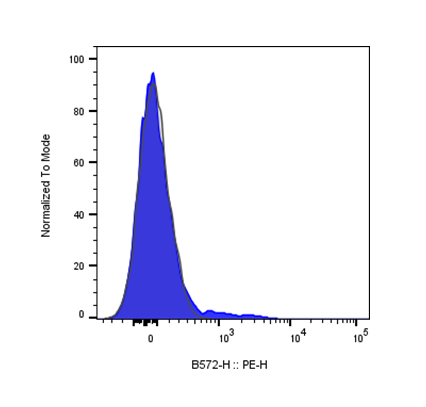
| Cat # | Size | Price | Quantity | |
|---|---|---|---|---|
| 200802 | 25 ug | $80 |
| Clone | m198AR2b |
|---|---|
| Application | Flow Cytometry |
| Reactivity | Mouse |
| Format | Biotin |
| Target Name | CD198, CCR8 CC-CKR-8, Ter1 |
| Isotype | Rat IgG2b |
| Antibody Type | Monoclonal |
| Regulatory Status | RUO |
| Formulation | Phosphate-buffered solution, pH 7.2, containing 0.09% sodium azide and 0.2% (w/v) BSA |
| Protein Concentration | 0.2 mg/mL |
| Storage&Handling | The antibody solution should be stored between 2°C and 8°C |
| Recommended Usage | For flow cytometric staining, it is recommended to use less than 0.5 µg of this reagent per 0.5-1.0 million cells in a 100 µL volume. Optimal reagent performance should be determined by titration for each specific application. For detection, use a secondary reagent with this product. |
| RRID | AB_3739006 |
| Research Areas | Tregs, Th2 cells, Monocytes, Macrophages, Monocyte-derived Dendritic cells, Chemokine receptors, Chemotaxis |
| See All Formats | Clone m198AR2b |
CD198, more commonly known as CCR8 (C-C chemokine receptor 8), is a G protein-coupled receptor (GPCR) involved in directing immune cell migration and positioning within tissues. CD198 is expressed on select immune cell subsets, most notably T helper type 2 (Th2) cells, regulatory T cells (Tregs), skin-homing memory T cells, and certain innate lymphoid cells. Through its role in chemokine sensing, CD198 contributes to immune surveillance, tissue-specific immunity, and the regulation of inflammatory responses.
Structurally, CD198 is a seven-transmembrane domain receptor belonging to the class A rhodopsin-like GPCR family. It consists of seven α-helical transmembrane segments connected by extracellular and intracellular loops, an extracellular N-terminus involved in ligand recognition, and a cytoplasmic C-terminal tail that mediates signal transduction and receptor internalization. Upon ligand binding, CD198 couples primarily to Gi proteins, leading to inhibition of adenylate cyclase and activation of downstream pathways that regulate cytoskeletal rearrangement and cell migration.
The primary ligands for CD198 are the chemokines CCL1 (I-309) in humans and CCL8 in some species, which bind with high affinity and trigger receptor activation. Ligand engagement induces directional chemotaxis, promotes cell survival, and can modulate cytokine production depending on the responding cell type. Through these interactions, CD198 helps guide immune cells to specific tissue niches, particularly in the skin and mucosal environments.
CD198 has been implicated in several disease contexts. In allergic and inflammatory diseases, such as atopic dermatitis and asthma, CD198-expressing Th2 cells contribute to type 2 inflammation and tissue pathology. CD198 is also associated with tumor biology; CCR8 is frequently enriched on tumor-infiltrating regulatory T cells, where it supports their accumulation and suppressive function within the tumor microenvironment. This selective expression has made CD198 a marker of highly suppressive Tregs in cancer.
Therapeutically, CD198 is an emerging target of interest, particularly in oncology and inflammatory disease. In cancer immunotherapy, strategies aimed at targeting CCR8-expressing Tregs seek to selectively deplete or inhibit immunosuppressive cells within tumors while sparing systemic immune regulation. In allergic and inflammatory conditions, antagonists of CD198 signaling are being explored to reduce pathogenic Th2 cell recruitment and inflammation. Additionally, CD198 expression serves as a useful biomarker for identifying tissue-resident and functionally specialized T cell subsets, underscoring its growing relevance in translational immunology.
Biotin Rat IgG2b Isotype Control Antibody
Biotin Anti-Mouse CD198 (CCR8) Antibody TDS
Biotin Rat IgG2b Isotype Control Antibody, Clone RTK4530
Have a product or application question? Consult our FAQs or contact us.