| Cat # | Size | Price | Quantity | |
|---|---|---|---|---|
| 604101 | 25 ug | $145 | ||
| 604102 | 100 ug | $325 |
| Application | Enzymatic reaction |
|---|---|
| Format | Liquid, Purified |
| Expression Host | E.coli |
| Target Name | BirA ligase |
| Species | Escherichia coli |
| Accession Number | P06709 |
| Sources | BirA ligase with N-terminus GST is expressed in E.coli cells. |
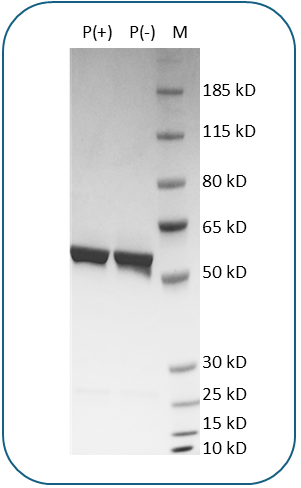
| Molecular Weight | This protein has a predicted molecular weight of 62.2 kDa. Under DTT-reducing conditions, the protein migrates at approximately 65 kDa on SDS-PAGE. |
| Affinity Tag | N-GST |
| Purity | >95% based on SDS-PAGE under reducing condition |
| Regulatory Status | RUO |
| Formulation | 20mM Tris, 300mM NaCL, 5mM DTT, 10% glycerol |
| Endotoxin level | Not tested |
| Protein Concentration | 25µg size is bottled at 0.3mg/mL concentration. 100 µg size is supplied at a lot-specific concentration. |
| Storage and Handling | Briefly centrifuge the vial upon receipt. An unopened vial can be stored at 4°C for up to 2 weeks, or at -20°C or below for up to six months. The protein may be further diluted to 0.1 mg/mL using 0.22 µm filtered Tris PH 7.5 buffer. For long-term storage, the diluted stock solution should be aliquoted and stored at ≤ –70°C to minimize freeze-thaw cycles. If additional dilution is required, carrier proteins such as FBS or BSA should be added to maintain protein stability. |
BirA ligase (biotin–protein ligase) is a bacterial enzyme best known for catalyzing the ATP-dependent covalent attachment of biotin to specific lysine residues within target proteins. In its native context in Escherichia coli, BirA biotinylates the biotin carboxyl carrier protein (BCCP) subunit of acetyl-CoA carboxylase, a key enzyme in fatty acid synthesis. This post-translational modification is essential for metabolic function, as biotin acts as a cofactor in carboxylation reactions. BirA also functions as a transcriptional repressor in bacteria, regulating genes involved in biotin biosynthesis depending on intracellular biotin levels.
Structurally, BirA is a soluble cytosolic protein of approximately 35 kDa that forms a homodimer under certain functional states. It contains a central catalytic domain responsible for binding biotin and ATP, forming a reactive biotinyl-5′-AMP intermediate. The enzyme then transfers biotin to the ε-amino group of a specific lysine within a conserved recognition sequence. Its primary ligands are biotin and ATP, as well as the acceptor protein substrate. Engineered systems commonly use a minimal 15-amino-acid “AviTag” peptide, which BirA recognizes with high specificity.
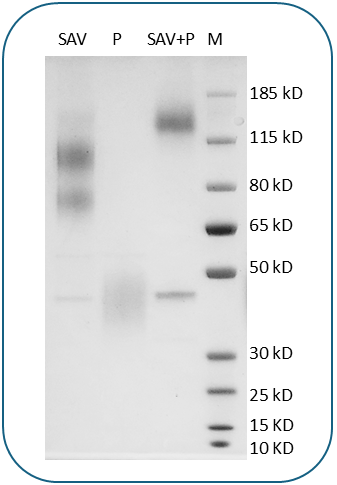
In research and development, BirA is widely used for site-specific protein biotinylation. Recombinant proteins fused to an AviTag can be enzymatically biotinylated either in vivo or in vitro, enabling uniform, stoichiometric labeling. This precise biotinylation is particularly valuable for applications such as surface plasmon resonance (SPR), ELISA development, flow cytometry reagents, cell-based assays, and structural biology studies. Because the biotin–streptavidin interaction is extremely strong and specific, BirA-mediated labeling provides a robust and versatile tool for immobilization, detection, and multimerization of proteins in both basic research and therapeutic development workflows.
Have a product or application question? Consult our FAQs or contact us.