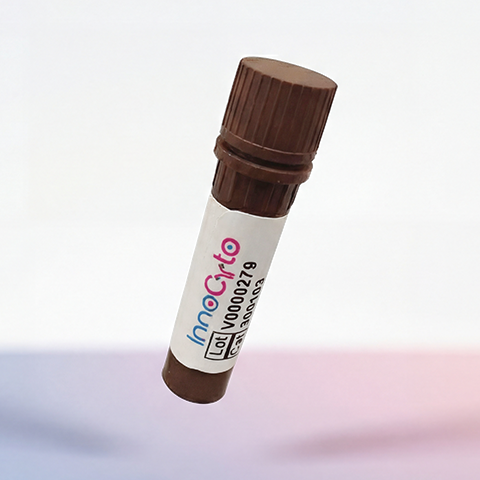
| Cat # | Size | Price | Quantity | |
|---|---|---|---|---|
| 502901 | 1 mg | $250 | ||
| 502902 | 5 mg | $750 | ||
| 502903 | 20 mg | $2000 |
| Clone | Felvizumab |
|---|---|
| Application | Flow cytometry, animal model study |
| Host Species | Mammalian cells |
| Format | Liquid |
| Product Description | Felvizumab Biosimilar, RSV Monoclonal Antibody |
| Isotype | Human IgG1 |
| Regulatory Status | RUO |
| Clonality | Recombinant |
| Immunogen | RSV |
| Species specificity | Human |
| Purity | >95% by reducing SDS-PAGE |
| Grade | In vivo |
| Storage Conditions | 4ºC |
| Maximal Shelf Life | 12 months |
| Synonyms | F protein |
| See All Formats | Clone Felvizumab |
Felvizumab, also known as RSHZ19, is a humanized monoclonal antibody that belongs to the immunoglobulin G1 kappa (IgG1κ) subclass. It was engineered to target a highly conserved epitope on the fusion (F) glycoprotein of the respiratory syncytial virus (RSV), specifically binding to amino acid residues 417–432 within the F protein. Structurally, Felvizumab is composed of two identical heavy chains and two identical light chains linked by interchain disulfide bonds, forming the typical Y-shaped conformation of IgG antibodies. The molecule has an approximate molecular weight of 150 kilodaltons (kDa) and is produced using mammalian expression systems such as Chinese Hamster Ovary (CHO) cells to ensure proper folding and glycosylation.
The variable domains of Felvizumab’s heavy (VH) and light (VL) chains contain complementarity-determining regions (CDRs) derived from murine antibody sequences. These CDRs form the paratope, which interacts with high specificity and affinity to a linear epitope within the F protein of RSV. This binding site was selected for its conservation and structural importance in mediating the conformational changes required for viral fusion with host cell membranes. By engaging this epitope, Felvizumab stabilizes the prefusion conformation of the F protein or sterically hinders its rearrangement into the postfusion form, thereby preventing membrane fusion and viral entry in experimental systems modeling virus–cell interactions.
The Fc (fragment crystallizable) region of Felvizumab is fully human and confers structural stability and extended serum half-life through interaction with the neonatal Fc receptor (FcRn). It also has potential effector capabilities through binding to Fc gamma receptors (FcγRs), which can mediate secondary immune mechanisms in vitro. Overall, Felvizumab exemplifies rational antibody engineering integrating murine-derived antigen specificity with human immunoglobulin scaffolding, optimized for strong target recognition and inhibition of viral fusion processes in virological and structural biology research.
Felvizumab Biosimilar, RSV Monoclonal Antibody TDS
Anti-Human RSV (Palivizumab Biosimilar), Clone Palivizumab
Have a product or application question? Consult our FAQs or contact us.