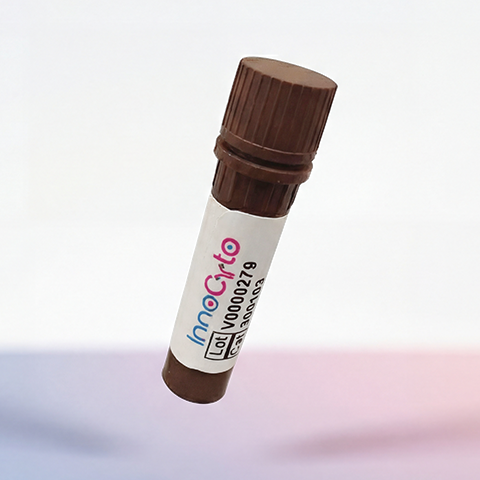
Human BCMA (CD269) Protein (C-Fc-Avi)

Product Details


ApplicationELISA, BLI
FormatLiquid, Purified
Expression HostHEK293
Target NameTNFRSF17, CD269, BCM, BCMA
SpeciesHuman
SourcesHuman BCMA protein (NP_001183.2) (Met1-Ala54) with C-terminus Human IgG1 Fc-Avi tag is expressed in HEK293 cells.
Accession NumberQ02223
Molecular WeightThe protein has a predicted molecular weight of 34.3kDa. Under DTT-reducing conditions, it migrates at approximately 35-45 kDa on SDS-PAGE.
Affinity TagC-Fc-Avi
Purity>95% based on SDS-PAGE under reducing condition
Regulatory StatusRUO
Formulation1xPBS buffer, pH7.4, 0.22 µm filtered
Endotoxin levelNot tested
Protein Concentration25µg size is bottled at 0.2mg/mL concentration. 100 µg size is supplied at a lot-specific concentration.
Storage and HandlingBriefly centrifuge the vial upon receipt. An unopened vial can be stored at 4°C for up to 2 weeks, or at -20°C or below for up to six months. The protein may be further diluted to 0.1 mg/mL using 0.22 µm-filtered PBS buffer (pH 7.4). For long-term storage, the diluted stock solution should be aliquoted and stored at ≤ –70°C to minimize freeze-thaw cycles. If additional dilution is required, carrier proteins such as FBS or BSA should be added to maintain protein stability.

Background Information


B-cell maturation antigen (BCMA), also known as CD269 or TNFRSF17, is a transmembrane glycoprotein that serves as a critical regulator of B cell development and function. It belongs to the tumor necrosis factor receptor (TNFR) superfamily and is predominantly expressed on plasma cells and a subset of late-stage B cells. BCMA’s primary biological role is to promote the survival, differentiation, and long-term maintenance of antibody-producing plasma cells by mediating signals from specific ligands in the TNF family.

Structurally, BCMA is a type I transmembrane protein consisting of an extracellular cysteine-rich domain responsible for ligand binding, a single transmembrane region, and a short cytoplasmic tail that interacts with intracellular signaling molecules. The cytoplasmic domain lacks death domains but recruits TRAF (TNF receptor-associated factor) adaptor proteins to activate downstream pathways such as NF-κB and MAPK. These signaling cascades enhance plasma cell survival and immunoglobulin production, contributing to humoral immunity maintenance. Soluble BCMA, generated through proteolytic cleavage by γ-secretase, can act as a decoy receptor to regulate ligand availability in the serum.

BCMA binds two main ligands: B-cell activating factor (BAFF, also known as BLyS) and a proliferation-inducing ligand (APRIL). Both ligands are produced by myeloid and stromal cells and support B cell homeostasis. Among these, APRIL binds BCMA with higher affinity and is the primary mediator of BCMA-dependent signaling in plasma cells. The BAFF/APRIL–BCMA axis thus serves as a crucial checkpoint for sustained antibody production and plasma cell survival.

In disease contexts, BCMA is strongly implicated in multiple myeloma (MM) and certain B-cell lymphomas. Its selective overexpression on malignant plasma cells makes it an important diagnostic marker and a therapeutic target. BCMA-directed treatments have revolutionized therapy for multiple myeloma, including antibody-drug conjugates (e.g., belantamab mafodotin), bispecific T cell engagers (e.g., teclistamab, elranatamab), and CAR-T cell therapies (e.g., idecabtagene vicleucel, ciltacabtagene autoleucel). These agents exploit BCMA’s restricted expression pattern to deliver targeted cytotoxicity, leading to durable responses in refractory disease. Consequently, BCMA has emerged as a prototypical target in the development of next-generation immunotherapies for hematologic malignancies.

Data Sheets


Human BCMA (CD269) Protein (C-Fc-Avi) TDS

Related Protocols


Direct ELISA Protocol

Related Products


Biotin Human BCMA (CD269) Protein (C-Fc-Avi)

Human BCMA (CD269) Protein (C-Fc)

PE Human BCMA (CD269) Protein (C-Fc)

APC Human BCMA (CD269) Protein (C-Fc)


Have a product or application question? Consult our FAQs or contact us.