| Cat # | Size | Price | Quantity | |
|---|---|---|---|---|
| 606301 | 25 ug | $145 | ||
| 606302 | 100 ug | $295 |
| Application | ELISA, BLI |
|---|---|
| Format | Liquid, Purified |
| Expression Host | CHO |
| Target Name | FcRn, FCGRT & B2M |
| Species | Human |
| Accession Number | XP_038512242.1 and NP_001271408.1 |
| Sources | Recombinant human Human FCGRT (Ala 24-Ser 297) with C-terminus His-Avi tag and Human b2M (Ile 21-MET119) with no tag are co-expressed in CHO cells. |
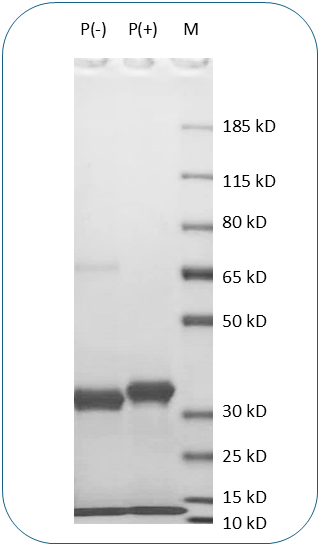
| Molecular Weight | Recombinant Human FCGRT has the predicted molecular weight of 33.99 kD. Recombinant Human b2M with no tag has the predicted molecular weight of 11.73 kD. Under DTT-reducing conditions, the proteins migrate at approximately 35 kD and 13 kD respecitively on SDS-PAGE. |
| Affinity Tag | C-His-Avi |
| Purity | >95% based on SDS-PAGE under reducing condition |
| Regulatory Status | RUO |
| Formulation | 1xPBS buffer, pH7.4, 0.22 µm filtered |
| Endotoxin level | Not tested |
| Protein Concentration | 25µg size is bottled at 0.2mg/mL concentration. 100 µg size is supplied at a lot-specific concentration. |
| Storage and Handling | Briefly centrifuge the vial upon receipt. An unopened vial can be stored at 4°C for up to 2 weeks, or at -20°C or below for up to six months. The protein may be further diluted to 0.1 mg/mL using 0.22 µm-filtered PBS buffer (pH 7.4). For long-term storage, the diluted stock solution should be aliquoted and stored at ≤ –70°C to minimize freeze-thaw cycles. If additional dilution is required, carrier proteins such as FBS or BSA should be added to maintain protein stability. |
| Research Areas | Endothelial cells, Epithelial cells, Monocytes, Macrophages, Dendritic cells, Neutrophils |
The neonatal Fc receptor (FcRn) is a critical component of the immune system that regulates the homeostasis and transport of immunoglobulin G (IgG) antibodies and albumin. Its primary function is to protect IgG and albumin from lysosomal degradation by binding to them in acidic intracellular compartments and recycling them back to the cell surface, where they are released at neutral pH. This mechanism extends the half-life of IgG and albumin in circulation, ensuring sustained immune protection and maintaining oncotic pressure in the blood.
Structurally, FcRn resembles a major histocompatibility complex (MHC) class I molecule. It is composed of a heavy α-chain (encoded by the FCGRT gene) non-covalently associated with β2-microglobulin. The α-chain forms three extracellular domains (α1, α2, and α3) and a transmembrane region. The binding sites for IgG and albumin are distinct: IgG interacts mainly through its Fc region with the α2-α3 interface of FcRn, whereas albumin binds to a separate site on the α1-α2 domains. Binding occurs optimally at endosomal pH (around 6.0) and is reversed at the physiological pH of blood (around 7.4).
The principal ligands of FcRn are IgG and serum albumin, but the receptor also interacts with IgG-based therapeutic antibodies and albumin-fused biologics. Through these interactions, FcRn plays a central role in pharmacokinetics by modulating antibody and drug half-lives. Variants or dysfunction of FcRn can influence immune responses and contribute to pathological conditions. For instance, altered FcRn expression or binding capacity may be involved in autoimmune diseases, such as myasthenia gravis or systemic lupus erythematosus, where excessive recycling of pathogenic autoantibodies exacerbates disease severity.
Therapeutically, the modulation of FcRn has become an emerging strategy. Blocking FcRn function can accelerate the degradation of pathogenic IgG in autoimmune disorders. FcRn inhibitors, such as efgartigimod and rozanolixizumab, have shown clinical efficacy by reducing IgG levels and improving disease symptoms. Conversely, enhancing FcRn interactions can prolong the half-life of therapeutic antibodies or albumin fusion proteins, thereby improving dosing efficiency. Consequently, FcRn represents an important pharmacological target in both antibody engineering and immune-mediated disease therapy.
Human FcRn (FCGRT/b2M heterodimer) protein (C-His-Avi) TDS
Human FcRn / FCGRT&b2M heterodimer protein (C-His-Avi)
Biotin Human FcRn / FCGRT&b2M heterodimer protein (C-His-Avi)
Have a product or application question? Consult our FAQs or contact us.