| Cat # | Size | Price | Quantity | |
|---|---|---|---|---|
| 605701 | 25 ug | $145 | ||
| 605702 | 100 ug | $295 |
| Application | ELISA, BLI |
|---|---|
| Format | Liquid, Purified |
| Expression Host | CHO |
| Target Name | TNFSF15, TL1A, VEGI |
| Species | Human |
| Accession Number | O95150 |
| Sources | Recombinant Human TNFSF15 (Leu72-Leu251) with N-terminus His tag is expressed in CHO cells. |
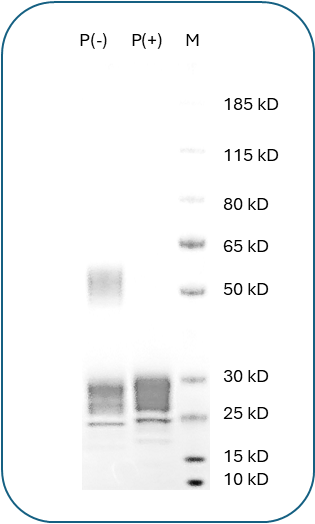
| Molecular Weight | This protein has a predicted molecular weight of 23 kDa. Under DTT-reducing conditions, the protein migrates at approximately 25-30 kDa on SDS-PAGE. |
| Affinity Tag | N-His |
| Purity | >95% based on SDS-PAGE under reducing condition |
| Regulatory Status | RUO |
| Formulation | 1xPBS buffer, pH7.4, 0.22 µm filtered |
| Endotoxin level | Not tested |
| Protein Concentration | 25µg size is bottled at 0.2mg/mL concentration. 100 µg size is supplied at a lot-specific concentration. |
| Storage and Handling | Briefly centrifuge the vial upon receipt. An unopened vial can be stored at 4°C for up to 2 weeks, or at -20°C or below for up to six months. The protein may be further diluted to 0.1 mg/mL using 0.22 µm-filtered PBS buffer (pH 7.4). For long-term storage, the diluted stock solution should be aliquoted and stored at ≤ –70°C to minimize freeze-thaw cycles. If additional dilution is required, carrier proteins such as FBS or BSA should be added to maintain protein stability. |
| Research Areas | Monocytes, Macrophages, Dendritic cells, Endothelial cells, T cells, Inflammation, Autoimmunity |
TL1A (TNF-like ligand 1A), also known as TNFSF15 and VEGI (vascular endothelial growth inhibitor), is a member of the tumor necrosis factor (TNF) superfamily that functions as a potent immunomodulatory cytokine. It is primarily produced by endothelial cells, dendritic cells, macrophages, and other antigen-presenting cells in response to inflammatory stimuli. TL1A plays a key role in regulating T cell–mediated immune responses, particularly in mucosal tissues, by promoting the expansion and activation of effector T cells.
Structurally, TL1A is a type II transmembrane protein with a short N-terminal cytoplasmic domain, a single transmembrane region, and a C-terminal extracellular TNF homology domain. Like other TNF superfamily ligands, TL1A forms homotrimers that are required for effective receptor engagement and signaling. TL1A can also be cleaved to generate a soluble form that retains biological activity. Its primary signaling receptor is death receptor 3 (DR3, also known as TNFRSF25), which is expressed on activated T cells, innate lymphoid cells (ILCs), and some regulatory T cell subsets.
Binding of TL1A to DR3 activates downstream signaling pathways, including NF-κB and MAPK cascades, leading to enhanced T cell proliferation, cytokine production (particularly IFN-γ and IL-17), and survival. TL1A also influences type 2 immunity by promoting expansion of group 2 innate lymphoid cells (ILC2s), thereby contributing to allergic inflammation. In addition to DR3, TL1A can bind the decoy receptor DcR3, which modulates its signaling activity.
Dysregulated TL1A expression has been strongly associated with chronic inflammatory diseases, particularly inflammatory bowel disease (IBD), including Crohn’s disease and ulcerative colitis. Genetic variants in TNFSF15 are linked to increased susceptibility to IBD and other autoimmune conditions. Elevated TL1A levels have also been implicated in rheumatoid arthritis, psoriasis, and asthma, where it contributes to pathogenic T cell activation and tissue inflammation.
Therapeutically, TL1A is an emerging target in immune-mediated diseases. Monoclonal antibodies that neutralize TL1A are currently under clinical investigation for IBD and other inflammatory disorders. By blocking TL1A–DR3 interactions, these therapies aim to reduce pathogenic T cell expansion and restore immune balance. As understanding of TL1A biology advances, it represents a promising target for precision treatment of chronic inflammatory conditions.
Human TL1A/TNFSF15 Protein (N-His) TDS
Have a product or application question? Consult our FAQs or contact us.