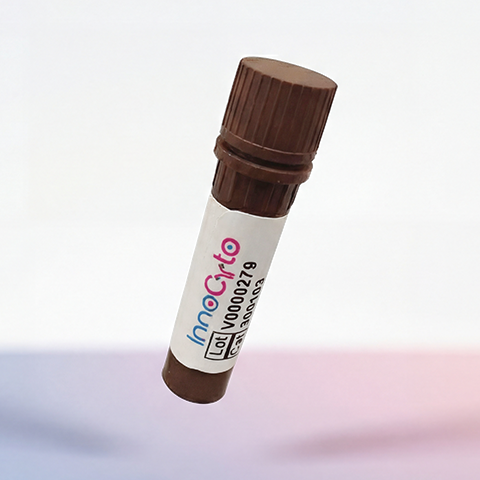
| Cat # | Size | Price | Quantity | |
|---|---|---|---|---|
| 502701 | 1 mg | $400 | ||
| 502702 | 5 mg | $800 | ||
| 502703 | 20 mg | $2200 |
| Clone | Etanercept |
|---|---|
| Application | Flow cytometry, animal model study |
| Host Species | Mammalian cells |
| Reactivity | Human |
| Format | Liquid |
| Product Description | Etanercept Biosimilar |
| Isotype | Human IgG1 |
| Regulatory Status | RUO |
| Clonality | Recombinant |
| Species specificity | Human |
| Purity | >95% by reducing SDS-PAGE |
| Grade | In vivo |
| Min Sample Size | 1 mg |
| Storage Conditions | 4ºC |
| Maximal Shelf Life | 12 months |
| Synonyms | TNF receptor 2, TNFR2 |
| Target Name | TNFR2, CD120b, TNFRSF1B, p75, p75TNFR, TNFR80, TBPII |
| Antibody Type | Recombinant |
| Research Areas | T cells, Macrophages, Monocytes, B cells, Co-stimulation, Autoimmunity, Inflammation |
| See All Formats | Clone Etanercept |
Etanercept is a recombinant fusion protein designed to modulate signaling mediated by tumor necrosis factor (TNF). Structurally, it consists of the extracellular ligand-binding domain of the human TNF receptor 2 (TNFR2, also known as p75) fused to the Fc (fragment crystallizable) portion of human immunoglobulin G1 (IgG1). This fusion creates a soluble dimeric receptor with a molecular weight of approximately 150 kilodaltons (kDa). The molecule effectively mimics the natural TNF receptor but is engineered for enhanced stability, dimerization, and extended circulation in the bloodstream. Etanercept is produced in mammalian expression systems, typically Chinese Hamster Ovary (CHO) cells, to ensure proper folding, assembly, and glycosylation consistent with human proteins.
The TNFR2 extracellular domain within Etanercept retains its biological ability to bind both TNF-α and TNF-β (also called lymphotoxin-α), which are trimeric cytokines belonging to the TNF superfamily. Each Etanercept dimer presents two receptor-binding sites, enabling high-affinity sequestration of soluble and membrane-bound TNF molecules. By binding to TNF, the fusion protein prevents TNF from associating with its native cell surface receptors (TNFR1 and TNFR2), thereby inhibiting receptor-mediated signal transduction. This blockage directly affects downstream intracellular pathways such as the nuclear factor kappa B (NF-κB) and mitogen-activated protein kinase (MAPK) cascades, both of which regulate gene expression involved in inflammation, apoptosis, and immune regulation.
The Fc region of human IgG1 in Etanercept contributes to its molecular stability and half-life through interaction with the neonatal Fc receptor (FcRn), which protects it from lysosomal degradation and extends its systemic persistence. Unlike full monoclonal antibodies, Etanercept’s Fc component does not primarily mediate immune effector functions such as antibody-dependent cytotoxicity or complement activation. Overall, Etanercept exemplifies rational fusion-protein design that combines receptor-based ligand trapping with antibody-derived structural resilience, providing a robust model for studying TNF signaling inhibition and receptor–ligand dynamics in immunological research.
TNFR-2/Fc Fusion Protein (Etanercept Biosimilar) TDS
Anti-Human TNFα (Adalimumab Biosimilar), Clone Adalimumab
Anti-Human TNF alpha (Infliximab Biosimilar), Clone Infliximab
Have a product or application question? Consult our FAQs or contact us.