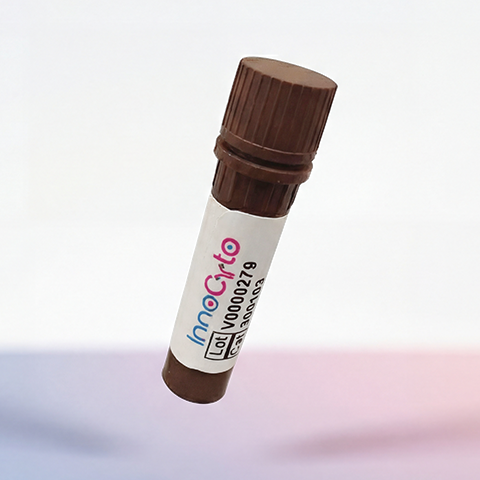
| Cat # | Size | Price | Quantity | |
|---|---|---|---|---|
| 506701 | 1 mg | $190 | ||
| 506702 | 5 mg | $590 | ||
| 506703 | 20 mg | $1800 |
| Clone | Zolbetuximab |
|---|---|
| Application | Flow cytometry, animal model study |
| Host Species | Mammalian cells |
| Reactivity | Human |
| Format | Liquid |
| Product Description | Anti-Human Claudin 18.2 (Zolbetuximab Biosimilar) |
| Isotype | Human IgG1 |
| Regulatory Status | RUO |
| Clonality | Recombinant |
| Immunogen | Human Claudin 18.2 |
| Species specificity | Human |
| Purity | >95% by reducing SDS-PAGE |
| Grade | In vivo |
| Min Sample Size | 1 mg |
| Storage Conditions | 4ºC |
| Maximal Shelf Life | 12 months |
| RRID | AB_3739342 |
| Target Name | CLDN18.2, Claudin 18, Claudin-18 splice variant 2 |
| Antibody Type | Recombinant |
| Research Areas | Cancer Marker, Epithelial cells |
| See All Formats | Clone Zolbetuximab |
Zolbetuximab is a chimeric monoclonal antibody of the immunoglobulin G1 kappa (IgG1κ) subclass that specifically targets claudin‑18 isoform 2 (CLDN18.2), a tight‑junction protein belonging to the claudin family. Structurally, it is a recombinant glycoprotein with an approximate molecular weight of 148 kilodaltons (kDa). The molecule consists of two identical heavy chains and two identical light chains connected by interchain disulfide bonds, producing the canonical Y‑shaped configuration typical of IgG antibodies. It is generated using mammalian expression systems, such as Chinese Hamster Ovary (CHO) cells, ensuring proper folding, glycosylation, and assembly consistent with humanized antibody architecture.
The variable domains of the heavy (VH) and light (VL) chains contain complementarity‑determining regions (CDRs) that define the antibody’s high‑affinity binding to an extracellular epitope on CLDN18.2. These CDRs form the paratope that engages the target via hydrogen bonding, electrostatic complementarity, and hydrophobic interactions. CLDN18.2 is a membrane‑spanning component of tight junctions, composed of four transmembrane helices and two extracellular loops. Upon binding, Zolbetuximab recognizes conformational epitopes within one of these extracellular loops, allowing selective interaction with the surface‑exposed form of the protein while avoiding other claudin isoforms. In cellular studies, this precise recognition can trigger conformational effects on the tight‑junction architecture and facilitate immune effector engagement.
The Fc (fragment crystallizable) region of Zolbetuximab, derived from the human IgG1 isotype, mediates interactions with Fc gamma receptors (FcγRs) on immune effector cells and complement component C1q, contributing to effector mechanisms such as antibody‑dependent cellular cytotoxicity (ADCC) and complement‑dependent cytotoxicity (CDC) in in‑vitro models. Additionally, the Fc domain confers molecular stability and extends serum half‑life through binding to neonatal Fc receptors (FcRn), which recycle IgG molecules. Overall, Zolbetuximab exemplifies rational chimeric antibody design combining specific epitope targeting, IgG1 structural integrity, and immune effector potential, serving as a model for studying tight‑junction protein interactions and receptor‑mediated cytotoxic mechanisms.
Anti-Human Claudin 18.2 (Zolbetuximab Biosimilar) TDS
Have a product or application question? Consult our FAQs or contact us.