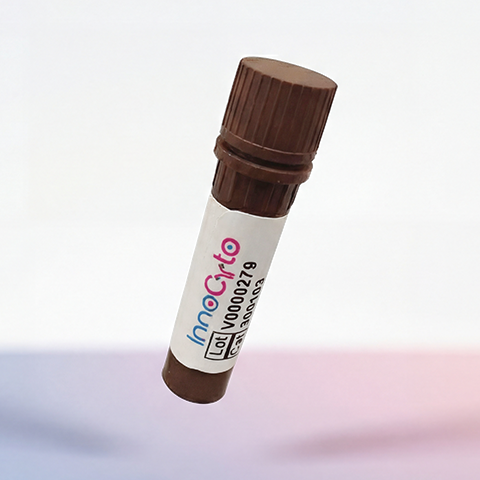
| Cat # | Size | Price | Quantity | |
|---|---|---|---|---|
| 506601 | 1 mg | $190 | ||
| 506602 | 5 mg | $590 | ||
| 506603 | 20 mg | $2000 |
| Clone | Ustekinumab |
|---|---|
| Application | Neutralization, Intracellular Flow cytometry, animal model study |
| Host Species | Mammalian cells |
| Reactivity | Human |
| Format | Liquid |
| Product Description | Ustekinumab Biosimilar, Human IL-12 / IL-23 Monoclonal Antibody |
| Isotype | Human IgG1 |
| Regulatory Status | RUO |
| Clonality | Recombinant |
| Immunogen | Human IL-12 / IL-23 |
| Species specificity | Human |
| Purity | >95% by reducing SDS-PAGE |
| Grade | In vivo |
| Min Sample Size | 1 mg |
| Storage Conditions | 4ºC |
| Maximal Shelf Life | 12 months |
| Synonyms | p40 |
| Target Name | IL-12/IL-23 |
| Research Areas | Cytokines, Inflammation |
| See All Formats | Clone Ustekinumab |
Ustekinumab is a fully human monoclonal antibody that belongs to the immunoglobulin G1 kappa (IgG1κ) subclass, designed to target the p40 subunit shared by two interleukins, interleukin‑12 (IL‑12) and interleukin‑23 (IL‑23). Structurally, Ustekinumab is a glycoprotein with a molecular weight of approximately 148 kilodaltons (kDa) and is composed of two identical heavy chains and two identical light chains connected by disulfide bonds, forming the characteristic Y‑shaped quaternary structure typical of IgG antibodies. Each heavy chain contains one variable (VH) and three constant (CH1–CH3) domains, while each light chain contains one variable (VL) and one constant (CL) domain. It is produced in mammalian expression systems, such as Chinese Hamster Ovary (CHO) cells, allowing proper folding, disulfide linkage formation, and glycosylation necessary for structural and functional stability.
The antigen‑binding regions of Ustekinumab are located within the complementarity‑determining regions (CDRs) of the VH and VL domains, which confer high‑affinity and specific binding to the p40 subunit. This epitope is the structural component common to both IL‑12 and IL‑23, which interact with their respective receptors to activate downstream signaling pathways. By binding to p40, Ustekinumab prevents IL‑12 from associating with the IL‑12 receptor β1/β2 complex and IL‑23 from associating with the IL‑23 receptor complex. This blockade inhibits receptor dimerization and subsequent activation of Janus kinase (JAK)–signal transducer and activator of transcription (STAT) signaling cascades, particularly those involving STAT4 (for IL‑12) and STAT3 (for IL‑23). In cell‑based assays, this interference results in reduced transcription of inflammatory cytokine genes and modulation of T‑helper (Th1 and Th17) differentiation pathways.
The Fc (fragment crystallizable) region of Ustekinumab, derived from the IgG1 isotype, contributes to molecular stability and long‑term persistence via engagement with the neonatal Fc receptor (FcRn) for recycling. While capable of limited Fc‑mediated effector interactions, Ustekinumab primarily functions through targeted ligand neutralization. Overall, it exemplifies precise antibody engineering that integrates structural stability with selective cytokine pathway inhibition, serving as a model for studying interleukin signaling and immune modulation mechanisms.
Anti-Human IL-12 / IL-23 (Ustekinumab Biosimilar) TDS
Anti-Human IL-12 / IL-23 (Briakinumab Biosimilar), Clone Briakinumab
Have a product or application question? Consult our FAQs or contact us.