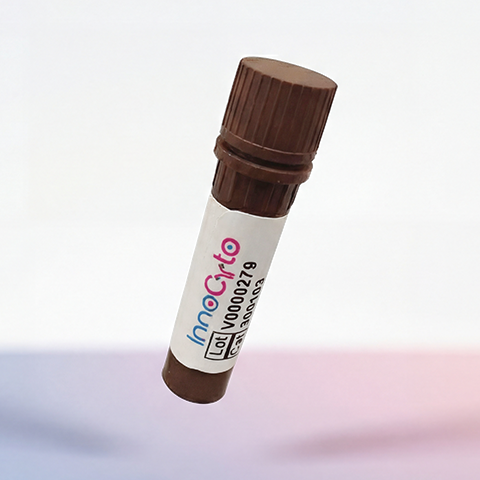
| Cat # | Size | Price | Quantity | |
|---|---|---|---|---|
| 631702 | 100 μg | $610 |
| Application | Bioassay |
|---|---|
| Format | Lyophilized from sterile PBS, pH 7.4. |
| Expression Host | E.coli |
| Target Name | IL-6, Interleukin-6, B cell stimulating factor-2 (BSF-2), Cytotoxic T cell differentiation factor (CDF), Hybridoma/plasmacytoma growth factor (HPGF), Hepatocyte stimulating factor (HSF) |
| Species | Human |
| accession number | NP_000591.1 |
| Sources | A DNA sequence encoding the mature form of human IL6 (NP_000591.1) (Val30-Met212) was expressed with an initial Met at the N-terminus. |
| Molecular Weight | The recombinant human IL6 consists of 184 amino acids and predicts a molecular mass of 20.95 kDa. It migrates as an approximately 19.7 kDa band in SDS-PAGE under reducing conditions. |
| Affinity Tag | None |
| Purity | ≥ 95 % as determined by SDS-PAGE |
| Regulatory Status | RUO |
| Endotoxin level | <0.01EU per μg protein |
| Protein Concentration | Lyophilized |
| Storage and Handling | Samples are stable for up to twelve months from date of receipt at -20℃ to -80℃. Store it under sterile conditions at -20℃ to -80℃. It is recommended that the protein be aliquoted for optimal storage. Avoid repeated freeze-thaw cycles. |
| Research Areas | Cytokines, Inflammation, Metabolism, Th17 cells, B cell Maturation, Megakaryocytes, Fever, Neurons, Autoimmunity |
Human interleukin-6 (IL-6) is a multifunctional cytokine produced by a wide range of cells, including macrophages, T cells, fibroblasts, and endothelial cells in response to infection or tissue injury. It plays a central role in immune regulation, inflammation, and hematopoiesis. IL-6 promotes differentiation of B cells into antibody-secreting plasma cells, supports T cell proliferation, and drives the acute phase response in the liver, leading to production of proteins such as C-reactive protein. It also influences metabolic and regenerative processes.
Structurally, IL-6 is a ~26 kDa glycoprotein composed of a four α-helix bundle typical of the cytokine family. IL-6 exerts its biological activity by binding to the IL-6 receptor (IL-6Rα), which exists in both membrane-bound and soluble forms. The IL-6/IL-6R complex then associates with the signal-transducing co-receptor gp130, triggering intracellular signaling cascades such as the JAK/STAT3, MAPK, and PI3K pathways. This dual signaling mechanism—classic signaling via membrane IL-6R and trans-signaling via soluble IL-6R—expands the range of IL-6-responsive cells.
Dysregulated IL-6 production is implicated in numerous diseases, including chronic inflammatory disorders (e.g., rheumatoid arthritis), autoimmune diseases, cytokine release syndrome, and cancer, where it can promote tumor growth and survival. Elevated IL-6 levels are also associated with severe infections and systemic inflammation. Therapeutically, targeting the IL-6 pathway has proven highly effective; monoclonal antibodies against IL-6 or IL-6R are widely used to treat inflammatory diseases and are also employed to manage cytokine storm syndromes. Conversely, IL-6 has been explored as a biomarker and, in some contexts, as a target to modulate immune and regenerative responses.
Recombinant Human IL6 Protein TDS
Have a product or application question? Consult our FAQs or contact us.