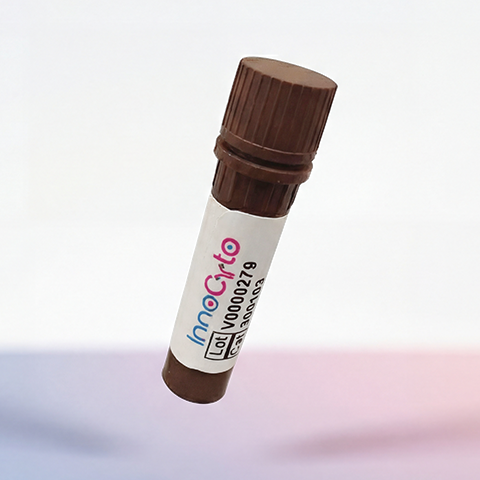
| Cat # | Size | Price | Quantity | |
|---|---|---|---|---|
| 505701 | 1 mg | $190 | ||
| 505702 | 5 mg | $480 | ||
| 505703 | 20 mg | $1100 |
| Clone | Semaglutide |
|---|---|
| Application | Flow cytometry, animal model study |
| Host Species | Mammalian cells |
| Reactivity | Human |
| Format | Liquid |
| Product Description | Semaglutide Biosimilar |
| Isotype | NA |
| Regulatory Status | RUO |
| Clonality | Recombinant |
| Species specificity | Human |
| Purity | >95% by reducing SDS-PAGE |
| Grade | In vivo |
| Storage Conditions | 4ºC |
| Maximal Shelf Life | 12 months |
| Synonyms | GLP1 |
| Target Name | GLP-1 receptor, GLP1R, GLP-1 Receptor Agonists |
| Antibody Type | Recombinant |
| Research Areas | Metabolism |
| See All Formats | Clone Semaglutide |
Semaglutide is a synthetic peptide analogue of the human glucagon-like peptide-1 (GLP-1) hormone, designed to activate GLP-1 receptors with enhanced stability and a prolonged half-life compared to the native peptide. Structurally, Semaglutide is a 31-amino acid polypeptide that closely resembles endogenous GLP-1, differing by strategic amino acid substitutions and chemical modifications that improve resistance to enzymatic degradation and extend its duration of action. Its molecular weight is approximately 4.1 kilodaltons (kDa). These structural changes include the substitution of alanine with α-aminoisobutyric acid at position 8, which confers resistance to cleavage by dipeptidyl peptidase-4 (DPP-4), and the attachment of a C18 fatty diacid chain via a glutamic acid spacer at lysine 26, enabling reversible binding to albumin in circulation.
The molecular design of Semaglutide ensures a balance between receptor activation and molecular stability. The peptide adopts a helical conformation similar to native GLP-1 when bound to the GLP-1 receptor, a class B G protein-coupled receptor (GPCR). The N-terminal region interacts with the receptor’s transmembrane domain, initiating receptor activation and intracellular signaling. This activation triggers the adenylate cyclase pathway, leading to cyclic adenosine monophosphate (cAMP) accumulation, protein kinase A (PKA) activation, and modulation of downstream metabolic enzymes. Additionally, the C-terminal acylation with the long-chain fatty diacid anchors the molecule to plasma albumin, reducing renal clearance and protecting it from proteolytic degradation, significantly extending its half-life.
Functionally, Semaglutide mimics the biological activity of endogenous GLP-1, promoting sustained receptor signaling in experimental models of glucose metabolism and energy balance. Its prolonged receptor occupancy and systemic stability make it a useful model for studying GPCR kinetics, peptide–receptor binding dynamics, and the role of structural modifications in peptide pharmacology.
Human GLP-1 Receptor Agonist (Semaglutide Biosimilar) TDS
Have a product or application question? Consult our FAQs or contact us.