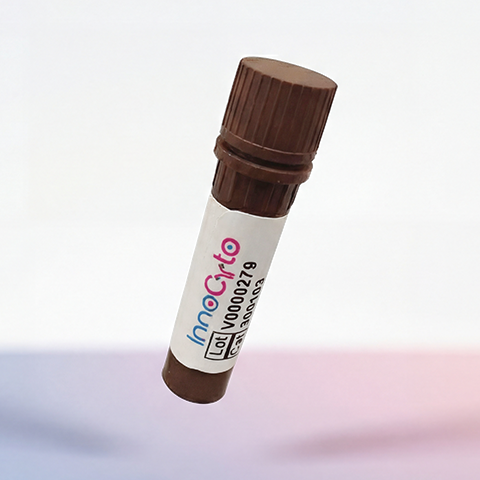
| Cat # | Size | Price | Quantity | |
|---|---|---|---|---|
| 805001 | 25 ug | $245 | ||
| 805002 | 100 ug | $595 |
| Application | Flow Cytometry |
|---|---|
| Format | Liquid, PE |
| Expression Host | CHO |
| Target Name | IL13RA2, CD213A2, IL-13R, IL13BP |
| Species | Human |
| Sources | Recombinant Human IL13RA2 protein (Cys22-Leu342) with C-terminus Fc tag is expressed in CHO cells and conjugated to PE. |
| Accession Number | Q14627 |
| Molecular Weight | The protein has a predicted molecular weight of 63.5 kDa. Under DTT-reducing conditions, it migrates at approximately 65-80 kDa on SDS-PAGE prior to conjugation. |
| Affinity Tag | C-Fc |
| Regulatory Status | RUO |
| Formulation | 1xPBS buffer, pH7.4, 0.09% NaN3 with a carrier protein |
| Endotoxin level | Not tested |
| Protein Concentration | 25µg size is bottled at 0.1mg/mL concentration. 100 µg size is bottled at lot specific concentration. |
| Storage and Handling | Briefly centrifuge the vial upon receipt. An unopened vial may be stored at 2–8°C for up to six months. |
| Research Areas | Activated B cells, Cancer Marker, Endothelial cells |
CD213a2, also known as interleukin-13 receptor alpha 2 (IL-13Rα2), is a high-affinity receptor for the cytokine interleukin-13 (IL-13). Unlike the canonical IL-13 receptor complex that mediates signaling, CD213a2 functions primarily as a decoy receptor, binding IL-13 with very high affinity but failing to transduce typical downstream signals. This unique property allows CD213a2 to modulate inflammatory and immune responses by sequestering IL-13 and preventing its interaction with signaling-competent receptors. In normal physiology, CD213a2 helps regulate type 2 immune responses and limits excessive IL-13-mediated inflammation.
Structurally, CD213a2 is a type I transmembrane glycoprotein consisting of an extracellular domain, a single transmembrane region, and a short cytoplasmic tail. The extracellular domain contains fibronectin type III-like repeats that form the IL-13 binding interface. Unlike the signaling IL-13 receptor alpha 1 (IL-13Rα1), CD213a2 has a truncated cytoplasmic domain lacking motifs necessary for JAK-STAT pathway activation. This structural feature explains its decoy function, though recent studies suggest it may mediate alternative signaling pathways, including TGF-β activation and AP-1 transcription factor signaling in certain cellular contexts.
The primary ligand for CD213a2 is IL-13, a pleiotropic cytokine involved in allergic inflammation, fibrosis, and immune regulation. CD213a2 binds IL-13 with approximately 50-fold higher affinity than the signaling receptor complex, making it an effective negative regulator. Additionally, soluble forms of CD213a2 can be shed from the cell surface, functioning as circulating decoy receptors that neutralize IL-13 activity systemically.
In disease, CD213a2 has garnered significant attention in oncology due to its selective overexpression in various malignancies, including glioblastoma, pancreatic cancer, ovarian cancer, and certain sarcomas, while being minimally expressed in normal tissues. This tumor-restricted expression pattern makes CD213a2 an attractive therapeutic target. Several immunotherapeutic approaches are under development, including chimeric antigen receptor (CAR) T cell therapies targeting CD213a2-positive glioblastomas, bispecific antibodies, and IL-13-based immunotoxins that exploit the receptor's high-affinity binding to deliver cytotoxic payloads selectively to tumor cells. Clinical trials have shown promising results, particularly in recurrent glioblastoma, positioning CD213a2 as an emerging biomarker and therapeutic target in precision cancer medicine.
PE Human IL13RA2 (CD213A2) Protein (C-Fc) TDS
Human IL13RA2 (CD213A2) Protein (C-Fc-Avi)
Biotin Human IL13RA2 (CD213A2) Protein (C-Fc-Avi)
Human IL13RA2 (CD213A2) Protein (C-Fc)
APC Human IL13RA2 (CD213A2) Protein (C-Fc)
Have a product or application question? Consult our FAQs or contact us.