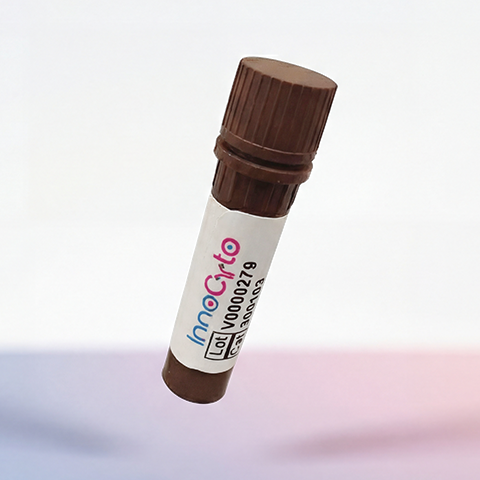
| Cat # | Size | Price | Quantity | |
|---|---|---|---|---|
| 630401 | 20 µg | $250 | ||
| 630402 | 100 µg | $625 |
| Application | Bioassay |
|---|---|
| Format | Lyophilized from sterile PBS, pH 7.4. |
| Expression Host | E.coli |
| Target Name | Flt-3 Ligand, FLT3LG, FMS-related tyrosine kinase 3 ligand |
| Species | Human |
| accession number | P49771-1 |
| Sources | A DNA sequence encoding the human FLT3LG (P49771-1) (Thr27-Ala181) was expressed with an N-terminal Met. |
| Molecular Weight | The recombinant Human FLT3LG consists of 156 amino acids and predicts a molecular mass of 17.75 kDa |
| Affinity Tag | None |
| Purity | ≥ 95 % as determined by SDS-PAGE. ≥ 95 % as determined by SEC-HPLC. ≥ 95 % as determined by SEC-MALS(Routinely tested). |
| Regulatory Status | RUO |
| Endotoxin level | <0.01EU per μg protein |
| Protein Concentration | Lyophilized |
| Storage and Handling | Proteins are stable for up to twelve months from date of receipt at -20℃ to -80℃. Store it under sterile conditions at -20℃ to -80℃. It is recommended that the protein be aliquoted for optimal storage. Avoid repeated freeze-thaw cycles. |
| Research Areas | Activated T cells, Dendritic cells, Hematopoietic stem cells |
Human Fms-like tyrosine kinase 3 ligand (Flt3L) is a hematopoietic growth factor that plays a central role in the development and expansion of immune cells, particularly dendritic cells. It is produced by a variety of cell types, including stromal cells and activated T cells, and is essential for the proliferation and differentiation of early hematopoietic progenitors. Flt3L is especially important for generating both conventional and plasmacytoid dendritic cells, thereby influencing antigen presentation and the initiation of adaptive immune responses.
Structurally, Flt3L exists as a type I transmembrane protein that can be cleaved to generate a soluble form, both of which are biologically active. It functions as a homodimer and binds specifically to its receptor, Flt3 (CD135), a class III receptor tyrosine kinase expressed on hematopoietic stem cells and progenitor cells. Upon ligand binding, Flt3 undergoes dimerization and autophosphorylation, activating downstream signaling pathways such as PI3K/AKT, MAPK, and STAT5, which promote cell survival and proliferation. Flt3L does not have multiple ligands but is the primary activator of the Flt3 receptor.
In disease, dysregulation of the Flt3/Flt3L axis is closely associated with hematologic malignancies, particularly acute myeloid leukemia (AML), where activating mutations in Flt3 drive uncontrolled cell growth. Therapeutically, Flt3L has been explored to enhance immune reconstitution following chemotherapy or bone marrow transplantation and to expand dendritic cells in cancer immunotherapy. Additionally, targeting mutant Flt3 with tyrosine kinase inhibitors has become an important strategy in treating AML.
Recombinant Human Flt3 Ligand Protein TDS
Have a product or application question? Consult our FAQs or contact us.