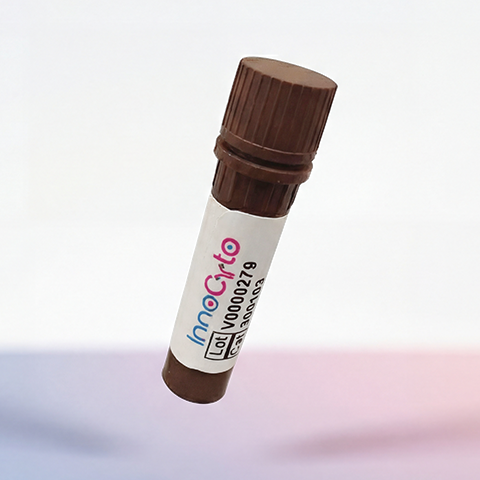
| Cat # | Size | Price | Quantity | |
|---|---|---|---|---|
| 506801 | 1 mg | $200 | ||
| 506802 | 5 mg | $650 | ||
| 506803 | 20 mg | $2200 |
| Clone | Eculizumab |
|---|---|
| Application | Flow cytometry, animal model study |
| Host Species | Mammalian cells |
| Reactivity | Human |
| Format | Liquid |
| Product Description | Anti-Human C5 (Eculizumab Biosimilar) |
| Isotype | Human IgG4 |
| Regulatory Status | RUO |
| Clonality | Recombinant |
| Immunogen | Human C5 |
| Species specificity | Human |
| Purity | >95% by reducing SDS-PAGE |
| Grade | In vivo |
| Storage Conditions | 4ºC |
| Maximal Shelf Life | 13 months |
| Synonyms | Complement C5 |
| Target Name | C5, complement protein C5, Complement component 5, CPAMD4 |
| Antibody Type | Recombinant |
| Research Areas | Complement |
| See All Formats | Clone Eculizumab |
Eculizumab is a recombinant humanized monoclonal antibody belonging to the immunoglobulin G2/4 hybrid subclass, designed to specifically target the human complement component C5. Structurally, the molecule has a molecular weight of approximately 148 kilodaltons (kDa) and follows the canonical IgG architecture composed of two identical heavy chains and two identical light chains, joined by interchain disulfide bonds to form a Y-shaped configuration. The variable domains of the heavy (VH) and light (VL) chains are derived from murine antibody sequences that confer antigen-binding specificity, while the constant regions are of human origin, allowing compatibility with human immune system components. It is produced in mammalian expression systems such as Chinese Hamster Ovary (CHO) cells, which ensure correct folding, glycosylation, and structural fidelity.
The antigen-binding sites of Eculizumab, formed by the complementarity-determining regions (CDRs) within the VH and VL domains, exhibit high specificity and affinity for a site on complement protein C5. This non-covalent interaction involves hydrogen bonding and hydrophobic contacts that lock onto C5, preventing its enzymatic cleavage by the C5 convertase complex into the fragments C5a and C5b. By blocking this cleavage, Eculizumab effectively stops the formation of the membrane attack complex (MAC; C5b–C9 complex) and inhibits downstream complement cascade activation. This molecular mechanism provides a controlled means of modulating terminal complement activity in biochemical and immunological experiments involving complement-mediated lysis and inflammation.
The Fc (fragment crystallizable) region of Eculizumab is engineered to minimize effector functions such as antibody-dependent cellular cytotoxicity (ADCC) and complement-dependent cytotoxicity (CDC), achieved through its IgG2/4 hybrid design. This structural configuration retains binding to the neonatal Fc receptor (FcRn), extending the antibody’s circulatory half-life by protecting it from lysosomal degradation. Overall, Eculizumab exemplifies precise antibody engineering tailored for high-affinity target binding and selective inhibition of complement activation at the C5 level, serving as a refined model for studying terminal complement regulation and immune effector modulation.
Anti-Human C5 (Eculizumab Biosimilar) TDS
Have a product or application question? Consult our FAQs or contact us.