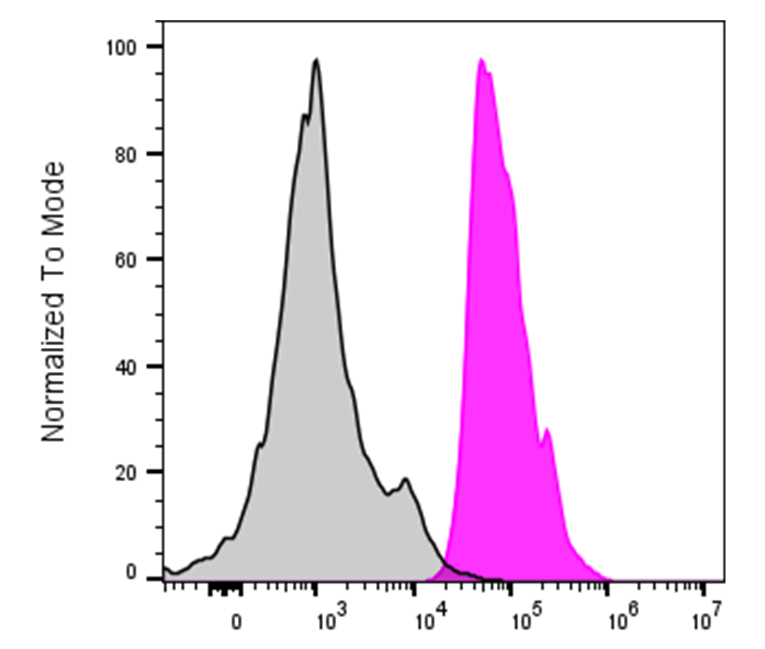
| Cat # | Size | Price | Quantity | |
|---|---|---|---|---|
| 121001 | 25 µg | $55 | ||
| 121002 | 100 µg | $125 |
| Clone | 147AB |
|---|---|
| Application | Flow Cytometry |
| Reactivity | Human |
| Format | Purified |
| Target Name | CD147, Neurothelin, Basigin, EMMPRIN |
| Isotype | Rabbit IgG |
| Antibody Type | Monoclonal |
| Regulatory Status | RUO |
| Formulation | Phosphate-buffered solution, pH 7.2, containing 0.09% sodium azide |
| Protein Concentration | 0.5 mg/mL |
| Storage & Handling | The antibody solution should be stored between 2°C and 8°C |
| Recommended Usage | For flow cytometric staining, it is recommended to use less than 0.2 µg of this reagent per 0.5-1.0 million cells in a 100 µL volume. Optimal reagent performance should be determined by titration for each specific application |
| See All Formats | Clone 147AB |
CD147, also known as Basigin (BSG), EMMPRIN, or M6, is a widely expressed cell-surface glycoprotein that participates in cell adhesion, migration, metabolism, and tissue remodeling. It is particularly abundant on activated immune cells, epithelial cells, endothelial cells, and tumor cells. CD147 is well known for stimulating surrounding stromal cells to produce matrix metalloproteinases (MMPs), thereby promoting extracellular matrix remodeling. It also contributes to glucose metabolism by interacting with monocarboxylate transporters such as MCT1 and MCT4, facilitating lactate transport across the plasma membrane.
CD147 is a type I transmembrane glycoprotein belonging to the immunoglobulin superfamily. It contains two extracellular immunoglobulin-like domains, a single transmembrane region, and a short cytoplasmic tail. The extracellular domains mediate many of its protein-protein interactions. CD147 can form homomers and interact with several membrane proteins, including cyclophilins, integrins, and monocarboxylate transporters. Extracellular cyclophilin A and cyclophilin B can bind CD147 and contribute to inflammatory signaling, although CD147 has a diverse set of context-dependent binding partners rather than a single classical ligand.
CD147 has been implicated in numerous pathological processes, particularly cancer, inflammation, cardiovascular disease, and infectious diseases. In cancer, increased CD147 expression is associated with tumor invasion, angiogenesis, metastasis, and altered tumor metabolism. Its ability to promote MMP production and support lactate transport can contribute to tumor progression. CD147 also participates in inflammatory signaling and has been investigated in several infectious disease settings because of its interactions with host and pathogen-associated factors.
Because CD147 contributes to tumor invasion, metabolism, inflammation, and cell-cell interactions, it represents a potential therapeutic target. Antibodies and other inhibitors directed against CD147 or its interactions with MCTs and cyclophilins are being investigated for cancer and inflammatory diseases. Targeting CD147 may simultaneously affect extracellular matrix remodeling and tumor metabolic adaptation, making the molecule particularly attractive for combination therapeutic strategies. However, because CD147 is broadly expressed and performs important physiological functions, therapeutic approaches require careful consideration of potential effects on normal tissues.
Rabbit IgG, κ2 Isotype Control Antibody
Have a product or application question? Consult our FAQs or contact us.