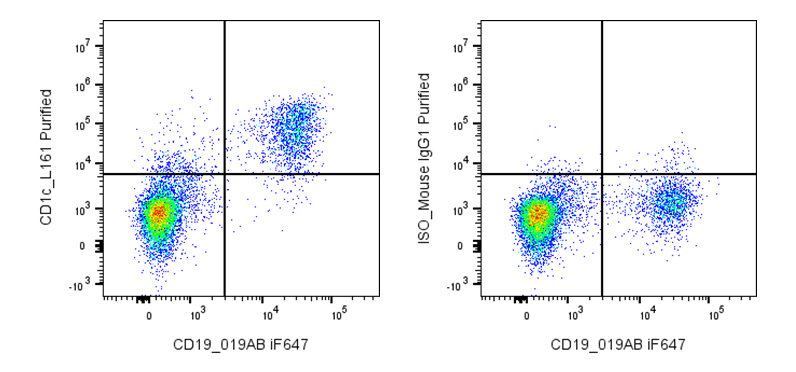
| Cat # | Size | Price | Quantity | |
|---|---|---|---|---|
| 120101 | 25 µg | $85 | ||
| 120102 | 100 µg | $185 |
| Clone | L161 |
|---|---|
| Application | Flow Cytometry, IHC-F, IHC-P |
| Reactivity | Human |
| Format | Purified |
| Target Name | CD1C, M241, BDCA-1, R7 |
| Isotype | mouse IgG1 |
| Antibody Type | Monoclonal |
| Regulatory Status | RUO |
| Formulation | Phosphate-buffered solution, pH 7.2, containing 0.09% sodium azide |
| Protein Concentration | 0.5 mg/mL |
| Storage & Handling | The antibody solution should be stored between 2°C and 8°C |
| Recommended Usage | For flow cytometric staining, it is recommended to use less than 0.2 µg of this reagent per 0.5-1.0 million cells in a 100 µL volume. Optimal reagent performance should be determined by titration for each specific application |
| See All Formats | Clone L161 |
Human CD1c, also known as BDCA-1 or CD1c antigen, is a member of the CD1 family of major histocompatibility complex (MHC) class I-like molecules that specializes in presenting lipid and glycolipid antigens to T cells. CD1c is expressed primarily on conventional dendritic cells (cDC2), B cells, monocytes, and some thymocytes. Unlike classical MHC molecules that present peptide antigens, CD1c binds lipid-based molecules derived from microbes or host tissues, thereby bridging innate and adaptive immunity. CD1c plays an important role in initiating immune responses against bacterial pathogens, particularly mycobacteria, and contributes to immune surveillance and the maintenance of self-tolerance.
Structurally, CD1c is a type I transmembrane glycoprotein composed of three extracellular α domains (α1, α2, and α3) that associate non-covalently with β2-microglobulin. The α1 and α2 domains form a deep hydrophobic antigen-binding groove that accommodates amphipathic lipid molecules, with their hydrophobic tails buried within the groove and polar head groups exposed for recognition by T-cell receptors. CD1c traffics through endosomal compartments where lipid loading and exchange occur before the molecule is transported to the cell surface. Known ligands include mycobacterial lipids such as phosphomycoketides and mannosyl phosphomycoketides, lipopeptides, phospholipids, sulfatides, and several endogenous self-lipids.
Altered CD1c expression and function have been associated with infectious diseases, autoimmune disorders, inflammatory conditions, and cancer. Defects in CD1c-mediated antigen presentation may impair antimicrobial immunity, whereas inappropriate presentation of self-lipids may contribute to autoimmune responses. In oncology, CD1c-positive dendritic cells are associated with enhanced antitumor immune responses and improved prognosis in several solid tumors. Therapeutically, CD1c is being investigated as a target for dendritic cell-based vaccines, lipid antigen immunotherapy, and strategies to enhance antigen presentation. In addition, monoclonal antibodies against CD1c are widely used to identify and isolate dendritic cell subsets for immunological research and the development of personalized cancer immunotherapies.
Mouse IgG1 Isotype Control Antibody
Have a product or application question? Consult our FAQs or contact us.