| Cat # | Size | Price | Quantity | |
|---|---|---|---|---|
| 119101 | 25 µg | $45 | ||
| 119102 | 100 µg | $90 |
| Clone | 040AM1 |
|---|---|
| Application | Flow Cytometry |
| Reactivity | Human |
| Format | Purified |
| Target Name | CD40, BP50, TNFRSF5 |
| Isotype | Mouse IgG1 |
| Antibody Type | Monoclonal |
| Regulatory Status | RUO |
| Formulation | Phosphate-buffered solution, pH 7.2, containing 0.09% sodium azide |
| Protein Concentration | 0.5 mg/mL |
| Storage & Handling | The antibody solution should be stored between 2°C and 8°C |
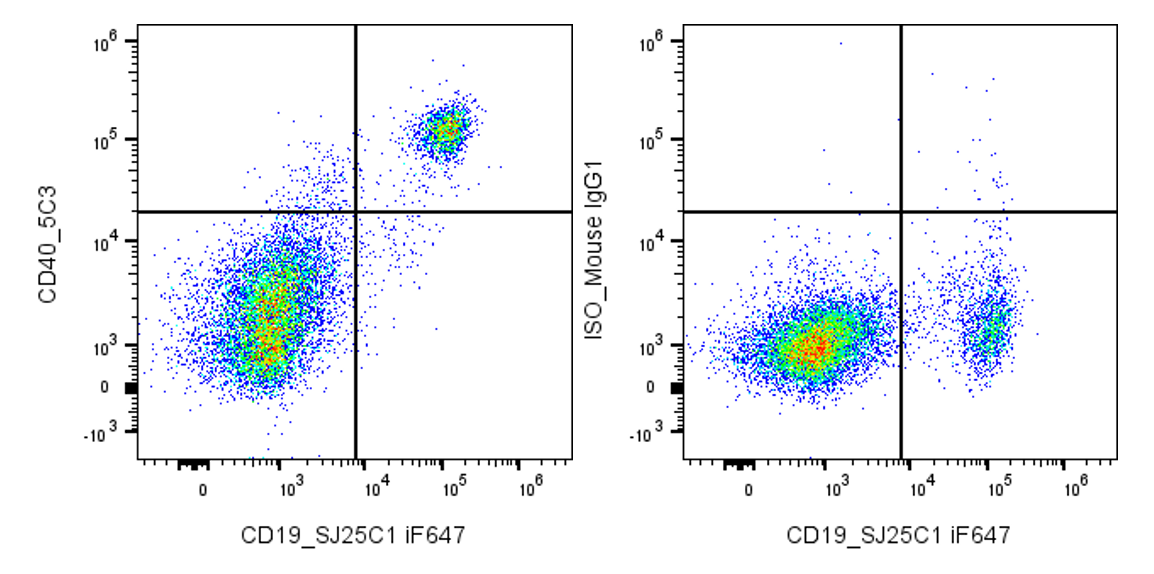
| Recommended Usage | For flow cytometric staining, it is recommended to use less than 0.2 µg of this reagent per 0.5-1.0 million cells in a 100 µL volume. Optimal reagent performance should be determined by titration for each specific application |
| See All Formats | Clone 040AM1 |
Human CD40 is a costimulatory receptor belonging to the tumor necrosis factor receptor (TNFR) superfamily, expressed on antigen-presenting cells such as B cells, dendritic cells, and macrophages, as well as some non-immune cells. It plays a central role in immune activation by promoting B-cell proliferation, immunoglobulin class switching, and dendritic cell maturation. Structurally, CD40 is a type I transmembrane protein with an extracellular domain composed of cysteine-rich repeats, a single transmembrane region, and a cytoplasmic tail that recruits adaptor proteins (e.g., TRAFs) to initiate downstream signaling pathways.
The primary ligand for CD40 is CD40L (CD154), expressed on activated T cells. Engagement of CD40 by CD40L triggers signaling cascades such as NF-κB activation, enhancing immune responses. Dysregulation of CD40 signaling is implicated in autoimmune diseases, chronic inflammation, and cancer. In oncology, CD40 can have dual roles: promoting anti-tumor immunity through immune activation, but also, in some contexts, supporting tumor cell survival.
Dacetuzumab is a humanized monoclonal antibody targeting CD40. It binds the extracellular domain and acts as a partial agonist, stimulating CD40 signaling while also mediating antibody-dependent cellular cytotoxicity (ADCC). Clinically, dacetuzumab has been investigated בעיקר in B-cell malignancies such as non-Hodgkin lymphoma. By activating immune cells and directly targeting CD40-expressing tumor cells, it represents an immunomodulatory therapeutic strategy, although its efficacy has been variable and is often explored in combination regimens.
Mouse IgG1 Isotype Control Antibody
Have a product or application question? Consult our FAQs or contact us.