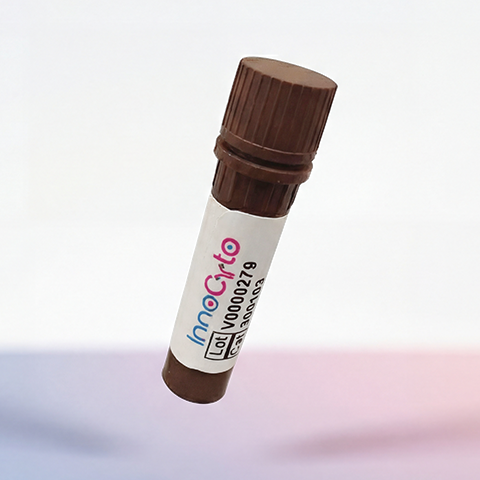
| Cat # | Size | Price | Quantity | |
|---|---|---|---|---|
| 207001 | 25 µg | $30 | ||
| 207002 | 100 µg | $60 |
| Clone | HM48-1 |
|---|---|
| Application | Flow Cytometry, IHC-F, IP |
| Reactivity | Mouse |
| Format | Purified |
| Target Name | CD48, Blast-1, BCM1, SLAMF2 |
| Isotype | Armenian Hamster IgG |
| Antibody Type | Monoclonal |
| Regulatory Status | RUO |
| Formulation | Phosphate-buffered solution, pH 7.2, containing 0.09% sodium azide |
| Protein Concentration | 0.5 mg/mL |
| Storage&Handling | The antibody solution should be stored between 2°C and 8°C |
| See All Formats | Clone HM48-1 |
Mouse CD48 is a glycosylphosphatidylinositol (GPI)-anchored cell surface glycoprotein encoded by the Cd48 gene and belongs to the signaling lymphocyte activation molecule (SLAM) family within the immunoglobulin superfamily. It is widely expressed on hematopoietic cells, including T cells, B cells, natural killer (NK) cells, monocytes, macrophages, dendritic cells, eosinophils, and mast cells. CD48 functions primarily as a co-stimulatory and adhesion molecule, helping regulate both innate and adaptive immune responses. Unlike many other immune receptors, CD48 lacks a transmembrane and cytoplasmic signaling domain because it is attached to the plasma membrane through a GPI anchor. Consequently, intracellular signaling occurs through associated membrane proteins and lipid raft-dependent signaling complexes.
Structurally, mouse CD48 contains two extracellular immunoglobulin-like domains followed by a C-terminal GPI anchor that tethers the protein to the cell membrane. Its principal ligand in mice is CD244 (2B4), a receptor expressed predominantly on NK cells, activated CD8+ T cells, and subsets of myeloid cells. The CD48-CD244 interaction regulates NK cell activation, cytotoxicity, cytokine production, and immune cell communication. Mouse CD48 can also participate in cell-cell adhesion and modulate T-cell receptor-mediated activation through interactions with additional membrane-associated signaling molecules.
CD48 contributes to host defense against viral, bacterial, and parasitic infections by enhancing leukocyte activation and immune cell cooperation. However, dysregulated CD48 expression has been implicated in autoimmune diseases, allergic inflammation, graft-versus-host disease, and chronic inflammatory disorders in mouse models. Altered CD48-CD244 signaling can either enhance or suppress immune responses depending on the cellular context, making this pathway important for maintaining immune homeostasis. Changes in CD48 expression have also been associated with hematologic malignancies and tumor immune responses.
Because the CD48-CD244 axis regulates multiple immune cell populations, it represents an attractive therapeutic target. Antibodies or engineered molecules that block or enhance CD48 interactions are being investigated in preclinical studies to modulate NK cell function, reduce autoimmune inflammation, improve transplant tolerance, and enhance antitumor immunity. Consequently, mouse CD48 is widely used as a model for studying immune regulation and developing novel immunotherapeutic strategies.
Armenian Hamster IgG Isotype Control Antibody
Have a product or application question? Consult our FAQs or contact us.