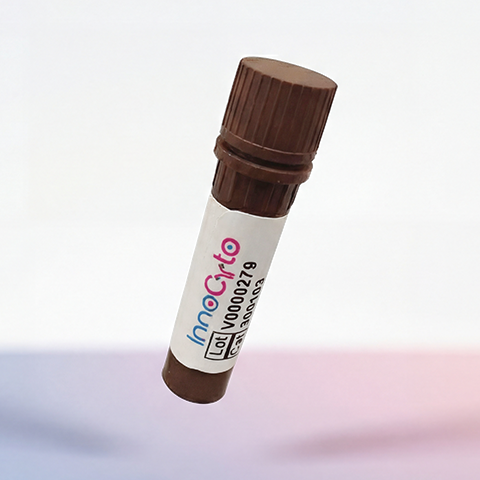
| Cat # | Size | Price | Quantity | |
|---|---|---|---|---|
| 301222 | 25 µg | $160 |
| Clone | 1016AH1 |
|---|---|
| Application | Flow Cytometry |
| Reactivity | N/A |
| Format | APC/Cyanine7 |
| Target Name | Human IgG1 isotype control |
| Isotype | Human IgG1 |
| Antibody Type | Monoclonal |
| Regulatory Status | RUO |
| Formulation | Phosphate-buffered solution, pH 7.2, containing 0.09% sodium azide and 0.2% (w/v) BSA |
| Protein Concentration | 0.2mg/mL |
| Storage & Handling | The antibody solution should be stored undiluted between 2°C and 8°C, and protected from prolonged exposure to light. Do not freeze. |
| Recommended Usage | Use at concentrations comparable to those used for the target-specific antibody APC/Cyanine7 has an excitation max at 650 nm and an emission max at 774 nm. |
| Excitation Laser | Red Laser (633 nm) |
| See All Formats | Clone 1016AH1 |
There are four IgG subclasses (IgG1, 2, 3, and 4) in humans, named in order of their abundance in serum (IgG1 being the most abundant). The measurement of immunoglobulin G can be a diagnostic tool for certain conditions.
APC/Cyanine7 Human IgG1 isotype control TDS
Have a product or application question? Consult our FAQs or contact us.