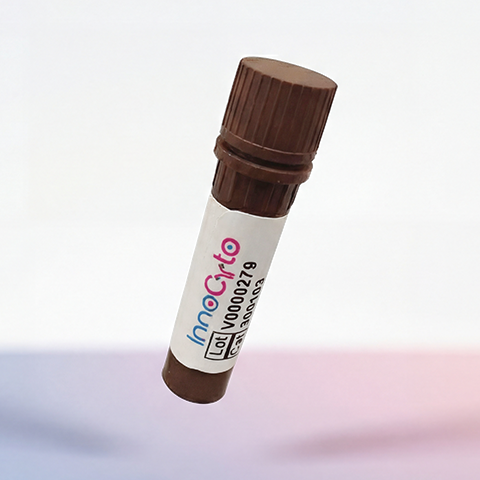
| Cat # | Size | Price | Quantity | |
|---|---|---|---|---|
| 509701 | 1 mg | $160 | ||
| 509702 | 5 mg | $400 | ||
| 509703 | 25 mg | $1100 |
| Clone | GK1.5-m2a |
|---|---|
| Application | ELISA, WB, Flow cytometry, IHC, ICC, animal model study |
| Host Species | CHO cells |
| Reactivity | Mouse |
| Format | Liquid |
| Target Name | CD4, T4, Leu3a |
| Product Description | In vivo Grade Recombinant Anti-mouse CD4 Monoclonal Antibody |
| Isotype | Mouse IgG2a Kappa |
| Antibody Type | Recombinant |
| Regulatory Status | RUO |
| Purity | >95% by reducing SDS-PAGE |
| Endotoxin | < 1 EU per 1 mg of the protein by the LAL method. |
| Storage Conditions | 4ºC |
| Grade | In vivo |
| Recommended Usage | This product is suitable for in vivo animal use. Optimal amounts need to be determined empirically for each experiment. |
| RRID | AB_3739371 |
| Research Areas | T cells, T cell Activation, Adaptive Immunity |
| See All Formats | Clone GK1.5-m2a |
CD4 is a cell surface glycoprotein best known for its essential role in adaptive immunity. It is primarily expressed on helper T lymphocytes (CD4⁺ T cells), as well as on subsets of dendritic cells, macrophages, and monocytes. CD4 functions as a co-receptor for the T cell receptor (TCR), enhancing antigen recognition and signal transduction during immune activation. Through its central role in coordinating immune responses, CD4⁺ T cells help regulate both cellular and humoral immunity.
The primary ligand for CD4 is the major histocompatibility complex class II (MHC II), which is expressed on professional antigen-presenting cells such as dendritic cells, B cells, and macrophages. During antigen presentation, CD4 binds to a conserved region of MHC II while the TCR recognizes the antigenic peptide. This interaction stabilizes the immunological synapse and recruits the Src-family kinase Lck to the TCR complex, amplifying downstream signaling. Through this mechanism, CD4 lowers the threshold for T cell activation and promotes effective immune responses. CD4 can also interact with other ligands, most notably the HIV envelope glycoprotein gp120, which exploits CD4 as a receptor for viral entry.
CD4⁺ T cells differentiate into multiple functional subsets, including Th1, Th2, Th17, T follicular helper (Tfh), and regulatory T cells (Tregs). Each subset produces distinct cytokines and performs specialized functions, ranging from activation of macrophages and cytotoxic T cells to support of antibody production and maintenance of immune tolerance. Proper balance among these subsets is critical for immune homeostasis.
Dysregulation or loss of CD4⁺ T cells is associated with a wide range of diseases. The most well-known example is HIV infection, in which viral-mediated depletion of CD4⁺ T cells leads to progressive immunodeficiency and increased susceptibility to opportunistic infections. Abnormal CD4⁺ T cell responses also contribute to autoimmune diseases such as multiple sclerosis, rheumatoid arthritis, and inflammatory bowel disease, as well as allergic and chronic inflammatory conditions.
CD4 plays an important role in therapeutics both as a biomarker and a direct target. CD4⁺ T cell counts are routinely used to monitor immune status in HIV patients. Therapeutic strategies aimed at modulating CD4⁺ T cell function-such as immune checkpoint inhibitors, cytokine-targeting biologics, and tolerogenic therapies-are widely used in cancer, autoimmunity, and transplantation. Additionally, CD4 is a key consideration in vaccine design, as effective and durable immune responses depend on robust CD4⁺ T cell help.
In Vivo Star Anti-Mouse CD4 Antibody TDS
Anti-Human CD3 Antibody, Clone Hit3a
iF700 Anti-Human CD3 Antibody, Clone Hit3a
iF488 Anti-Human CD3 Antibody, Clone OKT3
PerCP/Cyanine5.5 Anti-Human CD3 Antibody, Clone OKT3
Biotin Human CD4 Protein (C-His-Avi)
Anti-Human CD4 Antibody, Clone 004AB
iF488 Anti-Human CD4 Antibody, Clone OKT4-Rec
iF647 Anti-Human CD4 Antibody, Clone OKT4-Rec
Have a product or application question? Consult our FAQs or contact us.