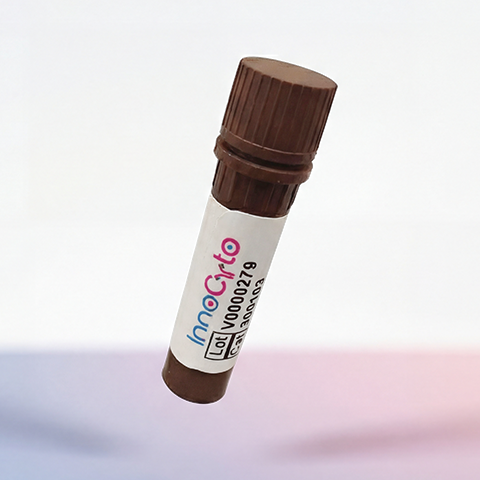
| Cat # | Size | Price | Quantity | |
|---|---|---|---|---|
| 571001 | 1 mg | $150 | ||
| 571002 | 5 mg | $350 | ||
| 571003 | 25 mg | $900 |
| Clone | IVSM1 |
|---|---|
| Application | An isotype-matched negative control for Mouse IgG1, kappa antibodies used in ELISA, Western Blot (WB), Flow Cytometry (Flow), Immunoprecipitation (IP), Immunohistochemistry (Paraffin) (IHC (P)), Immunohistochemistry (Frozen) (IHC (F)), and in vivo animal model research. |
| Reactivity | N/A |
| Format | Liquid |
| Target Name | Mouse IgG1 Isotype Control Antibody |
| Isotype | Mouse IgG1, κ |
| Antibody Type | Recombinant |
| Regulatory Status | RUO |
| Formulation | 0.2 μM filtered solution of 1x PBS. |
| Endotoxin Level | Less than 1 EU/mg of protein as determined by LAL method. |
| See All Formats | Clone IVSM1 |
Mouse IgG antibodies are classified into four major subclasses based primarily on the isotype of their heavy chains: IgG1, IgG2a (or IgG2c in certain mouse strains), IgG2b, and IgG3. Their light chains are either kappa (κ) or lambda (λ). Among these, IgG1 and kappa light chains are among the most abundant IgG isotypes found in mouse serum.
IgG antibodies are large glycoproteins with a molecular weight of approximately 150 kDa. They consist of four polypeptide chains: two identical heavy chains of approximately 50 kDa each and two identical light chains of approximately 25 kDa each. The chains are linked by disulfide bonds, forming a characteristic Y-shaped structure. Each light chain is connected to one heavy chain, while the two heavy chains are linked together in the hinge region. The antigen-binding sites are formed by the variable regions located at the tips of the two arms of the Y-shaped molecule, whereas the Fc region, formed by the constant regions of the heavy chains, mediates interactions with Fc receptors and other effector molecules.
Mouse IgG antibody reagents used in scientific research and clinical diagnostic applications are predominantly of the mouse IgG1 kappa isotype. Mouse IgG1 antibodies and engineered IgG1 variants are also widely used in therapeutic antibody discovery and development, where their binding specificity and Fc properties can be modified to achieve desired biological activities.
In Vivo Star Mouse IgG1 Isotype Control Antibody TDS
Have a product or application question? Consult our FAQs or contact us.