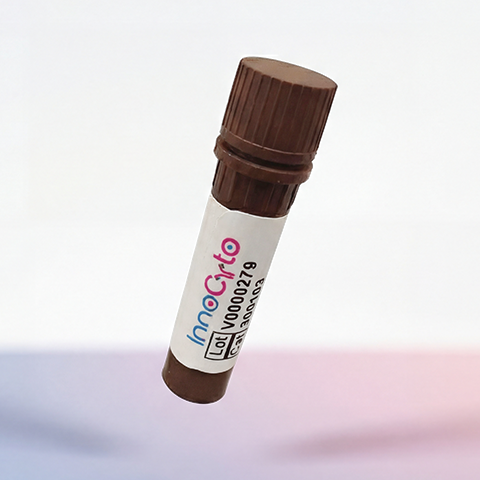
An isotype-matched negative control for Mouse IgG2a, kappa antibodies used in ELISA, Western Blot (WB), Flow Cytometry (Flow), Immunoprecipitation (IP), Immunohistochemistry (Paraffin) (IHC (P)), Immunohistochemistry (Frozen) (IHC (F)), and in vivo animal model research.
Reactivity
N/A
Format
Liquid
Target Name
Mouse IgG2a Isotype Control Antibody
Isotype
Mouse IgG2a, κ
Antibody Type
Recombinant
Regulatory Status
RUO
Formulation
0.2 μM filtered solution of 1x PBS.
Endotoxin Level
Less than 1 EU/mg of protein as determined by LAL method.
Mouse IgG antibodies are classified into four major subclasses based primarily on the isotype of their heavy chains: IgG1, IgG2a (or IgG2c in certain mouse strains), IgG2b, and IgG3. Their light chains are either kappa (κ) or lambda (λ). Among these, IgG1 and kappa light chains are among the most abundant IgG isotypes found in mouse serum.
IgG antibodies are large glycoproteins with a molecular weight of approximately 150 kDa. They consist of four polypeptide chains: two identical heavy chains of approximately 50 kDa each and two identical light chains of approximately 25 kDa each. The chains are linked by disulfide bonds, forming a characteristic Y-shaped structure. Each light chain is connected to one heavy chain, while the two heavy chains are linked together in the hinge region. The antigen-binding sites are formed by the variable regions located at the tips of the two arms of the Y-shaped molecule, whereas the Fc region, formed by the constant regions of the heavy chains, mediates interactions with Fc receptors and other effector molecules.
Mouse IgG2a antibodies and engineered IgG2a variants are also widely used in therapeutic antibody discovery and development, where their binding specificity and Fc properties can be modified to achieve desired biological activities.
In Vivo Star antibodies are premium-grade monoclonal antibodies purified and formulated specifically for use in animal studies. Each lot is manufactured under stringent quality controls to ensure the low endotoxin levels, high purity, and functional activity required for reliable in vivo results.
How are these antibodies different from standard research antibodies (e.g., for Western blot or flow cytometry)?
Standard research antibodies are optimized for in vitro detection assays and may contain preservatives, carrier proteins (like BSA), or higher endotoxin levels unsuitable for injection. In Vivo Star antibodies are formulated in injectable-grade, azide-free, low-endotoxin buffers and validated for functional bioactivity in living systems rather than just antigen binding.
What endotoxin and purity specifications do these antibodies meet?
All In Vivo Star antibodies are tested and certified to meet low-endotoxin thresholds (typically <1 EU/mg, lot-dependent) using the LAL (Limulus Amebocyte Lysate) assay, and are purified to ≥95% purity by SEC-HPLC or SDS-PAGE. Exact specifications are provided on the Certificate of Analysis (CoA) for each lot.
Are these antibodies azide-free and carrier-free?
All In Vivo Star antibodies are formulated without sodium azide and without carrier proteins such as BSA or gelatin, since both can interfere with animal physiology or immune readouts during in vivo studies.
Do you provide isotype controls?
Matched isotype control antibodies (same host species, isotype, and formulation) are available upon request for most clones to support proper experimental controls.
How should In Vivo Star antibodies be stored and handled?
Store at 4°C for short-term use and avoid repeated freeze-thaw cycles, which can reduce bioactivity; aliquoting is recommended for long-term storage per the product-specific storage instructions on the Certificate of Analysis. Always confirm storage conditions and expiration on the CoA that accompanies each lot, as these can vary slightly by antibody.
Have a product or application question? Consult our FAQs or contact us.