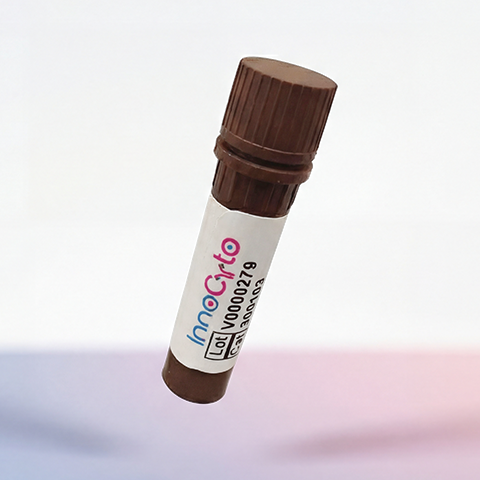
| Cat # | Size | Price | Quantity | |
|---|---|---|---|---|
| 570701 | 1 mg | $150 | ||
| 570702 | 5 mg | $350 | ||
| 570703 | 25 mg | $900 |
| Clone | IVSR1 |
|---|---|
| Application | An isotype-matched negative control for Rat IgG1, kappa antibodies used in ELISA, Western Blot (WB), Flow Cytometry (Flow), Immunoprecipitation (IP), Immunohistochemistry (Paraffin) (IHC (P)), Immunohistochemistry (Frozen) (IHC (F)), and in vivo animal model research. |
| Reactivity | N/A |
| Format | Liquid |
| Target Name | Rat IgG1 Isotype Control Antibody |
| Isotype | Rat IgG1, κ |
| Antibody Type | Recombinant |
| Regulatory Status | RUO |
| Formulation | 0.2 μM filtered solution of 1x PBS. |
| Endotoxin Level | Less than 1 EU/mg of protein as determined by LAL method. |
| See All Formats | Clone IVSR1 |
Rat IgG isotype control antibodies are non-specific immunoglobulins used as negative controls in immunological and cell-based assays. They are matched to the species, immunoglobulin class or subclass, and, when applicable, light-chain type of the primary antibody being tested. Rat IgG antibodies can be classified into several isotypes based on their heavy-chain composition, including IgG1, IgG2a, IgG2b, and IgG2c, depending on the rat strain and nomenclature used. Their light chains are primarily kappa (κ) or lambda (λ).
Rat IgG antibodies are glycoproteins with a typical molecular weight of approximately 150 kDa and consist of two identical heavy chains and two identical light chains. The four chains are connected by disulfide bonds, forming the characteristic Y-shaped antibody structure. The two antigen-binding sites are located within the Fab regions at the ends of the antibody arms, while the Fc region is responsible for interactions with Fc receptors and other immune components. For an isotype control, the antibody is selected to have the same or closely matched isotype and structural characteristics as the test antibody but lacks specific binding to the target antigen.
Rat IgG isotype controls are widely used in flow cytometry, immunohistochemistry, immunofluorescence, and other antibody-based assays to help evaluate nonspecific antibody binding and background staining. An appropriate isotype control should ideally match the primary antibody in species, isotype, conjugate, concentration, and antibody-to-protein ratio. By providing a measure of nonspecific interactions, rat IgG isotype controls can help researchers distinguish true antigen-specific signals from background caused by Fc-receptor interactions, cellular autofluorescence, or nonspecific antibody binding.
In Vivo Star Rat IgG1 Isotype Control Antibody TDS
Have a product or application question? Consult our FAQs or contact us.