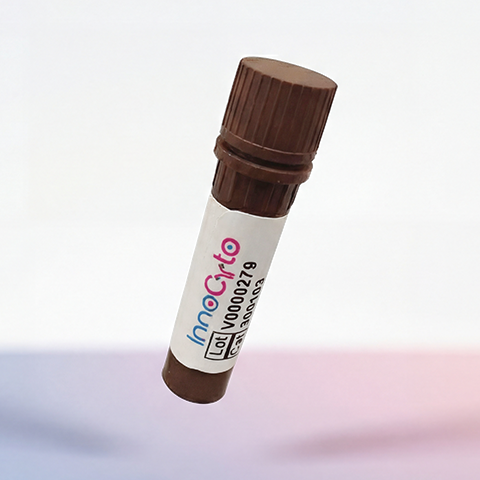
| Cat # | Size | Price | Quantity | |
|---|---|---|---|---|
| 800301 | 25 ug | $245 | ||
| 800302 | 100 ug | $595 |
| Application | Flow Cytometry |
|---|---|
| Format | Liquid, PE |
| Expression Host | HEK293 |
| Target Name | CD16A,FCGR3A, FCG3, FCGR3, IGFR3, |
| Species | Human |
| Sources | Recombinant Human CD16a (Gly17-Gln208, V176) with C-terminus His is expressed in HEK293 cell and conjugated to PE. |
| Accession Number | P08637 |
| Molecular Weight | The protein has a predicted molecular weight of 25kDa. Under DTT-reducing conditions, it migrates at approximately 40–50 kDa on SDS-PAGE prior to PE conjugation. |
| Affinity Tag | C-His |
| Regulatory Status | RUO |
| Formulation | 1xPBS buffer, pH7.4, 0.09% NaN3 with a carrier protein |
| Endotoxin level | Not tested |
| Protein Concentration | 25µg size is bottled at 0.1mg/mL concentration. 100 µg size is bottled at lot specific concentration. |
| Storage and Handling | Briefly centrifuge the vial upon receipt. An unopened vial may be stored at 2–8°C for up to six months. |
| Research Areas | NK cells, Monocytes, Macrophages, Neutrophils, ADCC, Cancer Marker, Infectious Diseases, Inflammation |
CD16, also known as Fc gamma receptor III (FcγRIII), is a low-affinity receptor for the Fc region of immunoglobulin G (IgG) and plays a pivotal role in antibody-mediated immune responses. It is expressed primarily on natural killer (NK) cells, neutrophils, monocytes, and macrophages, with expression patterns and function varying by cell type. In humans, CD16 exists in two closely related forms encoded by distinct genes: CD16a (FcγRIIIA) and CD16b (FcγRIIIB).
Structurally, CD16 is a type I transmembrane glycoprotein composed of two extracellular immunoglobulin-like domains responsible for IgG binding. CD16a is a transmembrane receptor expressed on NK cells and some myeloid cells, where it associates with signaling adaptor proteins containing immunoreceptor tyrosine-based activation motifs (ITAMs), such as FcεRIγ and CD3ζ. In contrast, CD16b is attached to the cell surface via a glycosylphosphatidylinositol (GPI) anchor and is expressed almost exclusively on neutrophils, lacking direct intracellular signaling capacity.
Functionally, CD16 mediates antibody-dependent cellular cytotoxicity (ADCC) and phagocytosis. Upon binding to IgG-opsonized target cells, CD16a on NK cells triggers activation signals that lead to the release of cytotoxic granules containing perforin and granzymes, resulting in target cell death. On myeloid cells, CD16 engagement promotes phagocytosis, oxidative burst, and cytokine release, contributing to pathogen clearance and inflammation. CD16 preferentially binds IgG1 and IgG3 subclasses, which are commonly elicited during effective immune responses.
CD16 plays important roles in both protective immunity and disease. Genetic polymorphisms in FCGR3A influence IgG binding affinity and have been associated with susceptibility to infections, autoimmune diseases, and cancer outcomes. Excessive or dysregulated CD16 activation contributes to inflammatory and autoimmune conditions such as rheumatoid arthritis and systemic lupus erythematosus, where immune complexes drive tissue damage. In cancer, CD16 expression and function on NK cells are critical determinants of immune surveillance and therapeutic efficacy.
In therapeutics, CD16 is central to the mechanism of action of many antibody-based drugs. Therapeutic monoclonal antibodies used in oncology, such as those targeting tumor antigens, rely on CD16-mediated ADCC for clinical activity. Engineering antibodies with enhanced Fc affinity for CD16 or developing CD16-engaging bispecific antibodies are active areas of drug development. Additionally, adoptive NK cell therapies often aim to optimize CD16 expression and signaling, highlighting CD16 as a key bridge between antibody recognition and cellular immune effector function.
PE Human CD16a (FcγRIIIa) Protein (C-His, 176V) TDS
Human CD16a (FcγRIIIa) Protein (C-His-Avi, 176V)
Biotin Human CD16a (FcγRIIIa) Protein (C-His-Avi, 176V)
APC Human CD16a (FcγRIIIa) Protein (C-His, 176V)
Human CD16a F176 (FcγRIIIa) Protein (C-His-Avi)
Biotin Human CD16a F176 (FcγRIIIa) Protein (C-His-Avi)
Have a product or application question? Consult our FAQs or contact us.