| Cat # | Size | Price | Quantity | |
|---|---|---|---|---|
| 813001 | 25 ug | $245 | ||
| 813002 | 100 ug | $595 |
| Application | Flow Cytometry |
|---|---|
| Format | Liquid, PE |
| Expression Host | CHO |
| Target Name | IL2RA, CD25, p55 |
| Species | Human |
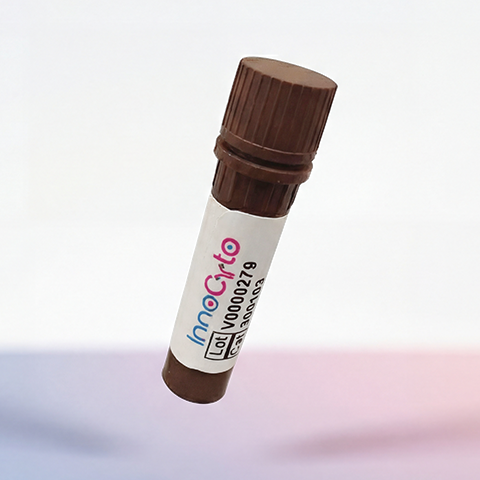
| Sources | Recombinant Human CD25 (Glu22-Cys213) with C-terminus Fc-tag is expressed in CHO cell and conjugated to PE. |
| Accession Number | P01589 |
| Molecular Weight | The protein has a predicted molecular weight of 48.0 kDa. Under DTT-reducing conditions, it migrates at approximately 65 kDa on SDS-PAGE prior to conjugation. |
| Affinity Tag | C-Fc |
| Regulatory Status | RUO |
| Formulation | 1xPBS buffer, pH7.4, 0.09% NaN3 with a carrier protein |
| Endotoxin level | Not tested |
| Protein Concentration | 25µg size is bottled at 0.1mg/mL concentration. 100 µg size is bottled at lot specific concentration. |
| Storage and Handling | Briefly centrifuge the vial upon receipt. An unopened vial may be stored at 2–8°C for up to six months. |
| Research Areas | T cells, Tregs, T cell Activation, Adaptive Immunity, Autoimmunity, Cancer Marker, Dendritic cells |
CD25, also known as the interleukin-2 receptor alpha chain (IL-2Rα), is a transmembrane glycoprotein that plays a central role in regulating immune responses. It functions as part of the interleukin-2 (IL-2) receptor complex, which is essential for T cell proliferation, survival, and differentiation. CD25 itself has low affinity for IL-2 when expressed alone, but when combined with IL-2 receptor beta (CD122) and the common gamma chain (CD132), it forms the high-affinity IL-2 receptor complex capable of effective signal transduction.
Structurally, CD25 is a single-pass type I membrane protein composed of an extracellular domain of approximately 219 amino acids responsible for IL-2 binding, a hydrophobic transmembrane segment, and a short cytoplasmic tail that lacks intrinsic signaling domains. The extracellular region is heavily glycosylated, which stabilizes its conformation and facilitates ligand interaction. Because the alpha chain alone is not signaling-competent, it acts primarily to increase the receptor complex’s affinity for IL-2 and to expand the range of cells responsive to low cytokine concentrations.
CD25’s main ligand, IL-2, is a cytokine crucial for T lymphocyte expansion and immune tolerance. Engagement of IL-2 with the high-affinity receptor triggers the JAK-STAT signaling pathway, leading to cell proliferation, differentiation, and regulatory T cell (Treg) function. CD25 is constitutively expressed on Tregs and upregulated on activated CD4+ and CD8+ T cells, making it a marker of immune activation as well as immune regulation.
Aberrant CD25 expression or IL-2 signaling contributes to immune dysregulation and disease. In autoimmune disorders such as multiple sclerosis and type 1 diabetes, alterations in the IL-2/CD25 axis impair Treg function and tolerance mechanisms. Elevated CD25 expression is also found in certain malignancies, particularly adult T-cell leukemia/lymphoma and Hodgkin lymphoma, where it may serve as a biomarker of malignant proliferation. Moreover, soluble CD25, released from cell surfaces, can act as a decoy receptor, modulating IL-2 availability and contributing to immune suppression in cancer and chronic inflammation.
Therapeutically, CD25 is a prominent target for immune modulation. Monoclonal antibodies such as basiliximab and daclizumab have been developed to block IL-2 binding, preventing T cell activation and mitigating graft rejection in organ transplantation. Conversely, IL-2 or CD25-targeted therapies that enhance regulatory T cell function are being explored to treat autoimmune diseases and promote immune tolerance. Thus, CD25 remains a critical immunological node, balancing activation and regulation within the immune system.
PE Human CD25 (IL-2Rα) Protein (C-Fc) TDS
Anti-Human CD4 Antibody, Clone 004AB
iF488 Anti-Human CD4 Antibody, Clone OKT4-Rec
iF647 Anti-Human CD4 Antibody, Clone OKT4-Rec
PE Anti-Human CD4 Antibody, Clone RPA-T4
Anti-Human CD25 (Daclizumab Biosimilar), Clone Daclizumab
iF488 Anti-Human CD25 (IL-2Rα) Antibody, Clone M-A251
iF647 Anti-Human CD25 (IL-2Rα) Antibody, Clone M-A251
Cynomolgus CD25 (IL-2Rα) Protein (C-His-Avi)
Biotin Cynomolgus CD25 (IL-2Rα) Protein (C-His-Avi)
Cynomolgus CD25 (IL-2Rα) Protein (C-His)
Have a product or application question? Consult our FAQs or contact us.