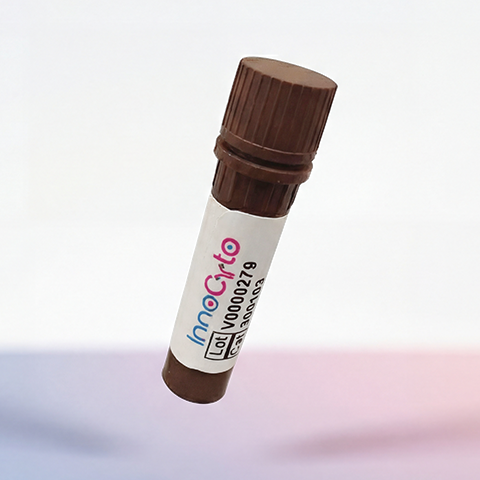
| Cat # | Size | Price | Quantity | |
|---|---|---|---|---|
| 801801 | 25 ug | $245 | ||
| 801802 | 100 ug | $595 |
| Application | Flow Cytometry |
|---|---|
| Format | Liquid, PE |
| Expression Host | HEK293 |
| Target Name | Mesothelin, MPF, MSLN |
| Species | Human |
| Sources | Human Mesothelin protein (Accession # AAH09272.1) (Glu296-Gly580) with C-terminus Fc tag is expressed in HEK293 cells and conjugated to PE. |
| Accession Number | Q13421 |
| Molecular Weight | The protein has a predicted molecular weight of 60kDa. Under DTT-reducing conditions, it migrates at approximately 65 kDa on SDS-PAGE prior to conjugation. |
| Affinity Tag | C-Fc |
| Regulatory Status | RUO |
| Formulation | 1xPBS buffer, pH7.4, 0.09% NaN3 with a carrier protein |
| Endotoxin level | Not tested |
| Protein Concentration | 25µg size is bottled at 0.1mg/mL concentration. 100 µg size is bottled at lot specific concentration. |
| Storage and Handling | Briefly centrifuge the vial upon receipt. An unopened vial may be stored at 2–8°C for up to six months. |
| Research Areas | Cancer Marker |
Mesothelin is a glycosylphosphatidylinositol (GPI)-anchored cell surface glycoprotein encoded by the MSLN gene. It is primarily expressed in normal mesothelial cells lining the pleura, pericardium, and peritoneum. Although its physiological role is not fully understood, mesothelin is believed to be involved in cell adhesion and signal transduction processes that maintain serosal membrane integrity. In normal tissues, mesothelin expression is limited, but in various malignancies, its expression is markedly upregulated, making it a useful biomarker and therapeutic target.
Structurally, mesothelin is synthesized as a 71-kDa precursor protein that is cleaved by furin into two products: a 31-kDa soluble form known as megakaryocyte potentiating factor (MPF) and a 40-kDa mature membrane-bound form—mesothelin itself. The membrane-anchored mesothelin consists primarily of a single extracellular domain rich in beta strands and disulfide bonds, which contribute to its stability. The protein’s GPI anchor tethers it to the outer leaflet of the plasma membrane, localizing it in lipid rafts where cell signaling complexes assemble.
One of mesothelin’s best-characterized ligands is mucin 16 (MUC16), also known as CA125, a high-molecular-weight glycoprotein commonly expressed in ovarian and certain other tumors. The interaction between mesothelin and MUC16 promotes heterotypic cell adhesion, facilitating tumor cell implantation, metastasis, and peritoneal spread, particularly in ovarian and pancreatic cancers. This binding interaction has significant implications for cancer progression and represents a target for intervention.
Pathologically, mesothelin is overexpressed in several cancers, including malignant mesothelioma, pancreatic adenocarcinoma, ovarian carcinoma, and certain lung and gastrointestinal cancers. Its restricted expression in normal tissue and high tumor selectivity have made mesothelin a promising target for cancer therapy. Therapeutic strategies under development or testing include monoclonal antibodies (such as amatuximab), antibody-drug conjugates, chimeric antigen receptor (CAR) T cell therapies, and immunotoxins (including the recombinant immunotoxin SS1P). Additionally, mesothelin-targeted vaccines and bispecific antibodies are being explored to harness immune activation against mesothelin-expressing tumors. Clinical trials have demonstrated encouraging outcomes, particularly in mesothelioma and pancreatic cancer, positioning mesothelin as a significant molecular target in oncology.
PE Human Mesothelin (E296-G580) Protein (C-Fc) TDS
Human Mesothelin (E296-G580) Protein (C-His-Avi)
Biotin Human Mesothelin (E296-G580) Protein (C-His-Avi)
Human Mesothelin (R35-E298) Protein (C-His)
Human Mesothelin (E296-G580) Protein (C-His)
PE Human Mesothelin (E296-G580) Protein (C-His)
APC Human Mesothelin (E296-G580) Protein (C-His)
Human Mesothelin (E296-G580) Protein (C-Fc)
Human Mesothelin (E296-G580) Protein (C-Fc-Avi)
Biotin Human Mesothelin (E296-G580) Protein (C-Fc-Avi)
Have a product or application question? Consult our FAQs or contact us.