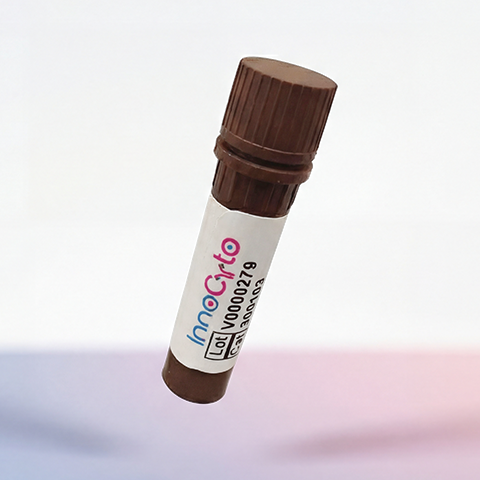
| Cat # | Size | Price | Quantity | |
|---|---|---|---|---|
| 633601 | 20 μg | $75 | ||
| 633602 | 100 μg | $220 |
| Application | Bioassay |
|---|---|
| Format | Lyophilized from sterile 40 mM His, 40 mM Arg, 150 mM NaCl, pH5.5 |
| Expression Host | Stable CHO |
| Target Name | beta-NGF, Beta-nerve growth factor, Ngf, Ngfb, Nerve Growth Factor Beta Subunit |
| Species | Human |
| accession number | NP_002497.2 |
| Sources | A DNA sequence encoding the mature form of human β-NGF (NP_002497.2) (Ser 122-Arg 239) was expressed. |
| Molecular Weight | The mature recombinant human β-NGF consists of 118 amino acids and has a predicted molecular mass of 13.2 KDa. β-NGF exists as a non-disulfide linked homodimer in solution.The molecular weight of this protein is around 29.7KDa verified by SEC-MALS (Routinely tested). |
| Affinity Tag | None |
| Purity | ≥95% as determined by SDS-PAGE. ≥90% as determined by SEC-HPLC. |
| Regulatory Status | RUO |
| Endotoxin level | < 1.0 EU per μg protein |
| Protein Concentration | Lyophilized |
| Storage and Handling | Samples are stable for up to twelve months from date of receipt at -20℃ to -80℃. Store it under sterile conditions at -20℃ to -80℃. It is recommended that the protein be aliquoted for optimal storage. Avoid repeated freeze-thaw cycles. |
Human beta-nerve growth factor (β-NGF), also known as NGF, is a neurotrophin that plays a crucial role in the development, survival, maintenance, and function of neurons. It is particularly important for sympathetic and sensory neurons and contributes to neuronal differentiation, axonal growth, synaptic plasticity, and pain perception. NGF also influences immune responses and tissue repair by interacting with neuronal and non-neuronal cells.
Human β-NGF is synthesized as a precursor protein, prepro-NGF, which undergoes proteolytic processing to produce mature NGF. The mature protein consists of 120 amino acids per subunit and forms a biologically active homodimer stabilized by intermolecular interactions and disulfide bonds. Its structure features the characteristic cystine-knot fold shared by neurotrophins. NGF belongs to the neurotrophin family, which also includes brain-derived neurotrophic factor (BDNF), neurotrophin-3 (NT-3), and neurotrophin-4 (NT-4).
NGF exerts its effects primarily through two receptors: tropomyosin receptor kinase A (TrkA/NTRK1), a high-affinity receptor tyrosine kinase, and p75 neurotrophin receptor (p75NTR/NGFR), a member of the tumor necrosis factor receptor superfamily. TrkA activation promotes neuronal survival, growth, and differentiation through downstream signaling pathways such as MAPK/ERK, PI3K/AKT, and PLCγ. The p75NTR receptor can modulate TrkA signaling and, depending on the cellular context and available co-receptors, influence cell survival or apoptosis. ProNGF can also interact with p75NTR and sortilin, contributing to distinct biological responses.
Abnormal NGF signaling is associated with chronic inflammatory pain, neuropathic pain, osteoarthritis, and certain neurological conditions. Elevated NGF levels can sensitize sensory neurons and increase pain signaling. Therapeutically, recombinant NGF has been investigated for promoting nerve regeneration and treating selected neurological disorders, while anti-NGF monoclonal antibodies have been developed to reduce chronic pain. Because NGF also supports essential neuronal functions, therapeutic strategies must balance pain relief with potential neurological and musculoskeletal adverse effects.
Recombinant Human Beta-NGF Protein TDS
Have a product or application question? Consult our FAQs or contact us.