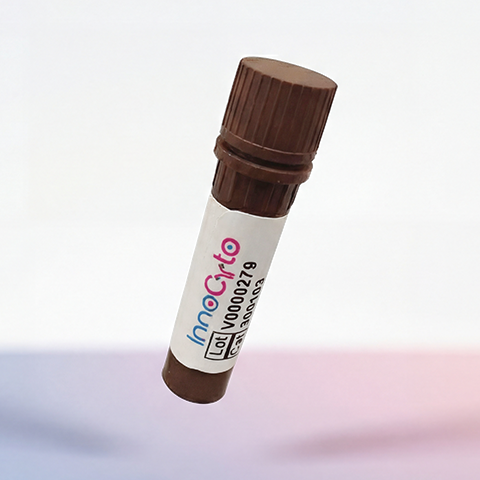
| Cat # | Size | Price | Quantity | |
|---|---|---|---|---|
| 632101 | 5 μg | $100 | ||
| 632102 | 100 μg | $780 |
| Application | Bioassay |
|---|---|
| Format | Lyophilized from sterile PBS, pH 7.4. |
| Expression Host | E.coli |
| Target Name | IL-33, IL-1F11 |
| Species | Human |
| accession number | NP_254274.1 |
| Sources | A DNA sequence encoding the C-terminal segment of human IL33 (NP_254274.1) (Ser 112-Thr 270) was expressed with an initial Met at the N-terminus. |
| Molecular Weight | The recombinant human IL33 comprises 160 amino acids and predicts a molecular mass of 18 kDa as estimated in SDS-PAGE under reducing conditions. |
| Affinity Tag | None |
| Purity | ≥ 95 % as determined by SDS-PAGE. ≥ 90 % as determined by SEC-HPLC. ≥ 90 % as determined by SEC-MALS(Routinely tested). |
| Regulatory Status | RUO |
| Endotoxin level | < 1.0 EU per μg protein |
| Protein Concentration | Lyophilized |
| Storage and Handling | Samples are stable for up to twelve months from date of receipt at -20℃ to -80℃. Store it under sterile conditions at -20℃ to -80℃. It is recommended that the protein be aliquoted for optimal storage. Avoid repeated freeze-thaw cycles. |
Interleukin-33 (IL-33) is a member of the interleukin-1 (IL-1) cytokine family and functions as both a cytokine and an intracellular nuclear factor. It is constitutively expressed by epithelial cells, endothelial cells, fibroblasts, and other structural cells, where it serves as an "alarmin" that is rapidly released following tissue injury or cellular stress. Once released, IL-33 alerts the immune system to tissue damage and promotes both innate and adaptive immune responses.
Human IL-33 is synthesized as a 270-amino acid precursor protein with an N-terminal nuclear localization domain and a C-terminal IL-1-like cytokine domain. Unlike many cytokines, full-length IL-33 is biologically active, although its activity can be modified by proteolytic processing. Its primary receptor is ST2 (IL1RL1), which forms a signaling complex with the co-receptor IL-1 receptor accessory protein (IL-1RAcP). Binding of IL-33 to ST2 activates MyD88-dependent signaling pathways, leading to NF-κB and MAP kinase activation and the production of inflammatory mediators.
IL-33 plays a central role in type 2 immune responses by activating type 2 innate lymphoid cells (ILC2s), mast cells, eosinophils, basophils, Th2 cells, and regulatory T cells. Dysregulated IL-33 signaling has been implicated in numerous diseases, including asthma, allergic rhinitis, atopic dermatitis, chronic obstructive pulmonary disease, inflammatory bowel disease, rheumatoid arthritis, cardiovascular disease, and certain cancers, where its effects may either promote anti-tumor immunity or support tumor progression depending on the tumor microenvironment.
Because of its broad involvement in inflammatory diseases, the IL-33/ST2 signaling axis has become an attractive therapeutic target. Monoclonal antibodies targeting IL-33 (such as itepekimab and tozorakimab) or its receptor ST2 are currently being evaluated in clinical trials for asthma, COPD, and other inflammatory disorders. These therapies aim to suppress excessive type 2 inflammation while preserving normal immune function, making IL-33 an important target for next-generation immunomodulatory treatments.
Recombinant human IL-33 Protein TDS
Have a product or application question? Consult our FAQs or contact us.