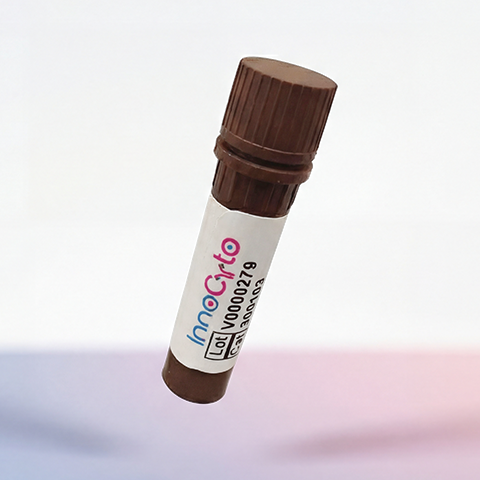
| Cat # | Size | Price | Quantity | |
|---|---|---|---|---|
| 633801 | 5 μg | $65 | ||
| 633802 | 100 μg | $600 |
| Application | Bioassay |
|---|---|
| Format | Lyophilized from sterile PBS, pH7.4. |
| Expression Host | E.coli |
| Target Name | IL-5, Interleukin 5, B-cell differentiation factor I, T-cell replacing factor |
| Species | Human |
| accession number | P05113 |
| Sources | A DNA sequence encoding the human IL5 (P05113) (Ile20-Ser134) was expressed. |
| Molecular Weight | The recombinant human IL5 consists of 115 amino acids and predicts a molecular mass of 13.1 KDa. |
| Affinity Tag | None |
| Purity | >95% as determined by SDS-PAGE. |
| Regulatory Status | RUO |
| Endotoxin level | < 1.0 EU per μg protein |
| Protein Concentration | Lyophilized |
| Storage and Handling | Samples are stable for up to twelve months from date of receipt at -20℃ to -80℃. Store it under sterile conditions at -20℃ to -80℃. It is recommended that the protein be aliquoted for optimal storage. Avoid repeated freeze-thaw cycles. |
Human interleukin-5 (IL-5) is a hematopoietic cytokine that plays a central role in the growth, differentiation, survival, and activation of eosinophils. It is produced primarily by type 2 helper T cells (Th2 cells), group 2 innate lymphoid cells (ILC2s), and other immune cell populations during type 2 immune responses. IL-5 supports eosinophil development in the bone marrow, promotes their release into circulation, and enhances their recruitment and activation at sites of inflammation. It also contributes to B-cell growth and antibody production under certain conditions.
Human IL-5 is a secreted glycoprotein belonging to the four-helix bundle family of class I cytokines. The mature protein contains approximately 115 amino acids per subunit and forms a biologically active homodimer stabilized by interchain disulfide bonds. Its structure supports receptor binding and biological activity. Unlike membrane-bound signaling molecules, IL-5 functions as a soluble ligand that engages a specific cell-surface receptor complex.
The IL-5 receptor consists of an IL-5-specific alpha subunit (IL-5Rα/CD125) and a common beta subunit (βc/CD131), which is shared with the receptors for interleukin-3 and granulocyte-macrophage colony-stimulating factor (GM-CSF). IL-5 binding promotes assembly or rearrangement of the receptor complex and activates intracellular signaling pathways, including JAK/STAT, MAPK, and PI3K pathways. These signals regulate eosinophil proliferation, survival, differentiation, and effector functions.
Dysregulated IL-5 signaling contributes to eosinophilic inflammation and is strongly associated with asthma, particularly eosinophilic asthma, as well as eosinophilic granulomatosis with polyangiitis and hypereosinophilic syndromes. Excessive eosinophil accumulation can damage tissues through the release of cytotoxic granule proteins and inflammatory mediators. Therapeutically, IL-5 is an important target for biologic treatments. Mepolizumab and reslizumab neutralize IL-5, whereas benralizumab targets IL-5Rα and promotes eosinophil depletion. These therapies can reduce eosinophilic inflammation, decrease asthma exacerbations, and improve disease control in appropriately selected patients.
Recombinant Human IL-5 Protein TDS
Have a product or application question? Consult our FAQs or contact us.