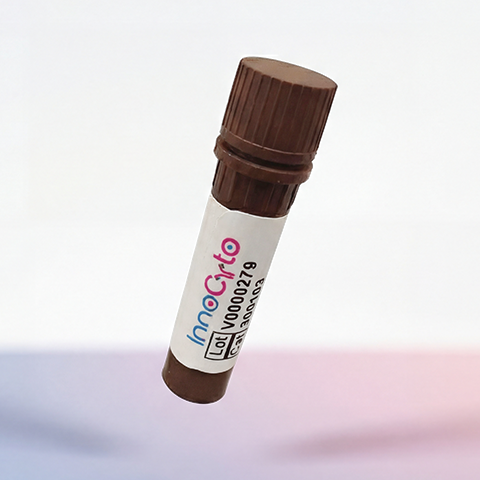
| Cat # | Size | Price | Quantity | |
|---|---|---|---|---|
| 633901 | 10 μg | $160 | ||
| 633902 | 100 μg | $750 |
| Application | Bioassay |
|---|---|
| Format | Lyophilized from sterile PBS, pH7.4. |
| Expression Host | E.coli |
| Target Name | IL-7, Interleukin 7, Lymphopoietin-1 (LP-1) |
| Species | Human |
| accession number | NP_000871.1 |
| Sources | A DNA sequence encoding the mature form of human IL7 (NP_000871.1)(Asp26-His177) was expressed with a N-terminal Met. |
| Molecular Weight | The recombinant human IL7 consists of 153 amino acids and predicts a molecular mass of 17.5 KDa. It migrates as an approximately 20.4 KDa band in SDS-PAGE under reducing conditions. |
| Affinity Tag | None |
| Purity | ≥95% as determined by SDS-PAGE. ≥95% as determined by SEC-HPLC |
| Regulatory Status | RUO |
| Endotoxin level | < 0.1 EU per μg protein |
| Protein Concentration | Lyophilized |
| Storage and Handling | Samples are stable for up to twelve months from date of receipt at -20℃ to -80℃. Store it under sterile conditions at -20℃ to -80℃. It is recommended that the protein be aliquoted for optimal storage. Avoid repeated freeze-thaw cycles. |
Human interleukin-7 (IL-7) is a cytokine essential for lymphocyte development, survival, proliferation, and immune homeostasis. It is produced primarily by stromal cells in the bone marrow and thymus, as well as by epithelial and other non-hematopoietic cells in lymphoid tissues. IL-7 is particularly important for the development of T lymphocytes and the maintenance of naïve and memory T cells. It also supports early B-cell development in humans and helps preserve a diverse, functional adaptive immune system.
Human IL-7 is a secreted glycoprotein consisting of 177 amino acids in its precursor form, including a signal peptide that is removed during secretion. The mature cytokine contains approximately 152 amino acids and adopts a characteristic four-helix bundle structure shared by class I hematopoietic cytokines. IL-7 functions as a soluble ligand that binds to a specific cell-surface receptor complex composed of the IL-7 receptor alpha chain (IL-7Rα/CD127) and the common gamma chain (γc/CD132), which is shared by several other cytokine receptors.
IL-7 binding induces receptor-associated signaling, primarily through JAK1 and JAK3, leading to activation of STAT5 and additional pathways, including PI3K/AKT. These signals promote lymphocyte survival by regulating anti-apoptotic proteins, support cell proliferation, and influence T-cell differentiation and homeostasis. IL-7 signaling is tightly regulated to maintain immune balance.
Abnormal IL-7 or IL-7 receptor signaling is associated with several diseases. Impaired signaling can cause severe immune deficiency, whereas excessive activity may contribute to autoimmune disorders, including multiple sclerosis and inflammatory conditions. Dysregulated IL-7 receptor signaling is also implicated in certain hematologic malignancies, particularly T-cell acute lymphoblastic leukemia, where activating mutations in IL7R can promote uncontrolled cell growth. Therapeutically, recombinant IL-7 has been investigated to restore or expand T-cell populations in patients with lymphopenia, cancer, or chronic infections. Conversely, blocking IL-7 or IL-7R signaling is being explored for autoimmune and inflammatory diseases, while IL-7-based approaches may enhance immune-cell expansion in cancer immunotherapy.
Recombinant Human IL-7 Protein TDS
Have a product or application question? Consult our FAQs or contact us.