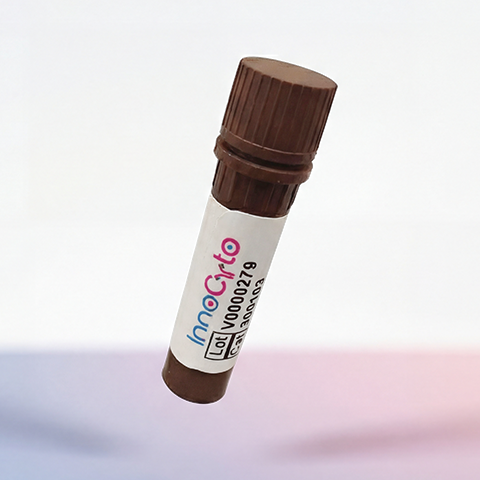
| Cat # | Size | Price | Quantity | |
|---|---|---|---|---|
| 671001 | 20 μg | $320 | ||
| 671002 | 200 μg | $890 |
| Application | Bioassay |
|---|---|
| Format | Lyophilized from sterile PBS, pH 7.4. |
| Expression Host | HEK293 |
| Target Name | G-CSF, Granulocyte-Colony Stimulating Factor, CSF3 |
| Species | Mouse |
| accession number | NP_034101.1 |
| Sources | A DNA sequence encoding the mouse CSF3 (NP_034101.1) (Met1-Ala208) was expressed and purified. |
| Molecular Weight | The recombinant mouse CSF3 consists of 178 amino acids and predicts a molecular mass of 19 KDa. The molecular weight of this protein is around 19.2 KDa verified by SEC-MALS(Routinely tested). |
| Affinity Tag | None |
| Purity | ≥95% as determined by SDS-PAGE. |
| Regulatory Status | RUO |
| Endotoxin level | < 0.1 EU per μg protein |
| Protein Concentration | Lyophilized |
| Storage and Handling | Samples are stable for up to twelve months from date of receipt at -20℃ to -80℃. Store it under sterile conditions at -20℃ to -80℃. It is recommended that the protein be aliquoted for optimal storage. Avoid repeated freeze-thaw cycles. |
Mouse granulocyte colony-stimulating factor (G-CSF), also known as colony-stimulating factor 3 (CSF3), is a secreted cytokine that regulates the production, differentiation, survival, and mobilization of neutrophils. It is an essential component of innate immunity, helping maintain neutrophil levels during normal hematopoiesis and increasing neutrophil production during infection or inflammation. G-CSF also promotes the functional activation of mature neutrophils, supporting their migration to sites of infection and their antimicrobial activities.
Mouse G-CSF is a glycoprotein belonging to the class I hematopoietic cytokine family. It is synthesized as a precursor protein and processed into a mature, secreted polypeptide of approximately 178 amino acids. Its structure consists of a characteristic four-helix bundle stabilized by intramolecular disulfide bonds. Glycosylation may influence its stability and biochemical properties. G-CSF functions as a soluble ligand that binds to the granulocyte colony-stimulating factor receptor (G-CSFR), also known as CSF3R or CD114, which is expressed primarily on neutrophil precursors and mature neutrophils.
Binding of G-CSF to G-CSFR induces receptor dimerization or rearrangement, activating intracellular signaling pathways, including JAK/STAT, MAPK, and PI3K/AKT. These pathways regulate myeloid cell proliferation, differentiation, survival, and mobilization from the bone marrow. G-CSF signaling is tightly controlled because excessive activity can contribute to abnormal neutrophil expansion and inflammatory responses.
Dysregulation of G-CSF production or signaling is associated with neutropenia, excessive neutrophilic inflammation, and certain malignancies. In some cancers, tumor-derived G-CSF can promote neutrophil expansion and contribute to an immunosuppressive tumor microenvironment. Therapeutically, recombinant G-CSF, including filgrastim and related agents, is widely used in humans to prevent or treat chemotherapy-induced neutropenia and to mobilize hematopoietic stem cells for transplantation. Mouse G-CSF is particularly valuable in preclinical studies investigating granulopoiesis, infection, inflammation, bone marrow recovery, and the development of cytokine-based therapies.
Have a product or application question? Consult our FAQs or contact us.