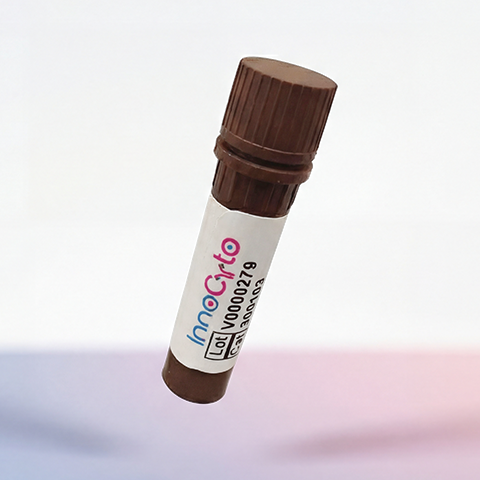
| Cat # | Size | Price | Quantity | |
|---|---|---|---|---|
| 670301 | 20 μg | $150 | ||
| 670302 | 100 μg | $395 |
| Application | Bioassay |
|---|---|
| Format | Lyophilized from sterile PBS, 2 mM DTT, pH7.4 |
| Expression Host | E.coli |
| Target Name | IL-2, T-cell growth factor (TCGF) |
| Species | Mouse |
| accession number | P04351 |
| Sources | A DNA sequence encoding the soluble form of mouse IL2 (P04351) (Ala 21-Gln 169) was expressed, with an initial Met at the N-terminus. |
| Molecular Weight | The recombinant mouse IL2 consists of 150 amino acids and has a calculated molecular mass of 17.4KDa. It migrates as an approximately 19 KDa in SDS-PAGE under reducing conditions. |
| Affinity Tag | None |
| Purity | > 90 % as determined by SDS-PAGE. |
| Regulatory Status | RUO |
| Endotoxin level | < 1.0 EU per μg protein |
| Protein Concentration | Lyophilized |
| Storage and Handling | Samples are stable for up to twelve months from date of receipt at -20℃ to -80℃. Store it under sterile conditions at -20℃ to -80℃. It is recommended that the protein be aliquoted for optimal storage. Avoid repeated freeze-thaw cycles. |
Mouse interleukin-2 (IL-2) is a pleiotropic cytokine that plays a central role in regulating immune responses, particularly the activation, proliferation, differentiation, and survival of T lymphocytes. It is produced primarily by activated CD4+ and CD8+ T cells following antigen recognition and T-cell receptor stimulation. IL-2 is essential for clonal expansion of antigen-specific T cells and helps coordinate adaptive immunity. It also supports the development and maintenance of regulatory T cells (Tregs), which suppress excessive immune activation and preserve immune tolerance.
Mouse IL-2 is a secreted protein belonging to the common gamma-chain cytokine family. It is synthesized as a precursor containing a signal peptide that is removed during secretion, producing a mature cytokine of approximately 133 amino acids. The mature protein adopts a compact, predominantly alpha-helical structure characteristic of this cytokine family. IL-2 signals through the IL-2 receptor (IL-2R), which consists of three subunits: IL-2Rα (CD25), IL-2Rβ (CD122), and the common gamma chain (γc or CD132). CD25 increases ligand-binding affinity, while CD122 and CD132 form the principal signaling components. Receptor engagement activates JAK1/JAK3 and downstream STAT5 signaling, promoting immune-cell responses.
Dysregulated IL-2 signaling can contribute to autoimmune and inflammatory diseases when immune regulation is impaired, while insufficient signaling may compromise Treg function and immune tolerance. IL-2 also influences antitumor immunity by supporting the expansion and activity of effector T cells and natural killer (NK) cells. However, its effects depend on dose, receptor expression, and cellular context; IL-2 can stimulate immune activation while also expanding immunosuppressive Tregs.
Therapeutically, IL-2 and engineered IL-2 variants are investigated for cancer immunotherapy and immune-mediated disorders. Strategies include enhancing effector T-cell and NK-cell activity or preferentially stimulating Tregs to treat autoimmune conditions. Mouse IL-2 is widely used in immunology research to study lymphocyte biology, cytokine signaling, immune tolerance, and preclinical therapeutic approaches.
Recombinant Mouse IL-2 Protein TDS
Have a product or application question? Consult our FAQs or contact us.