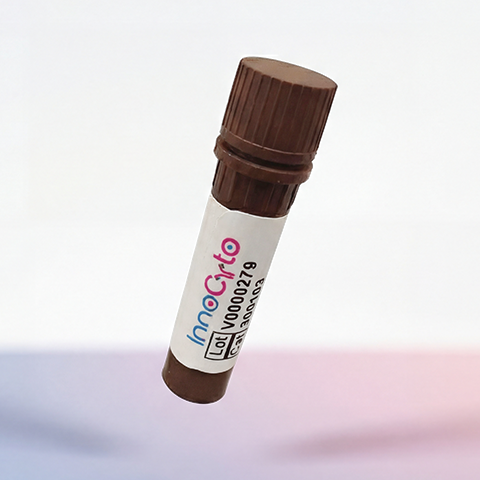
| Cat # | Size | Price | Quantity | |
|---|---|---|---|---|
| 670501 | 20 μg | $200 | ||
| 670502 | 100 μg | $550 |
| Application | Bioassay |
|---|---|
| Format | Lyophilized from sterile 50 mM HAc, pH3.0 |
| Expression Host | E.coli |
| Target Name | IL-6, Interleukin-6, B cell stimulating factor-2 (BSF-2), Cytotoxic T cell differentiation factor (CDF), Hybridoma/plasmacytoma growth factor (HPGF), Hepatocyte stimulating factor (HSF) |
| Species | Mouse |
| accession number | P08505 |
| Sources | A DNA sequence encoding the mouse IL6 (P08505) (Phe25-Thr211) was expressed and purified. |
| Molecular Weight | The recombinant mouse IL6 consists of 188 amino acids and predicts a molecular mass of 21.9 KDa. It migrates as an approximately 22 KDa band in SDS-PAGE under reducing conditions. |
| Affinity Tag | None |
| Purity | > 90 % as determined by SDS-PAGE. |
| Regulatory Status | RUO |
| Endotoxin level | < 1.0 EU per μg protein |
| Protein Concentration | Lyophilized |
| Storage and Handling | Samples are stable for up to twelve months from date of receipt at -20℃ to -80℃. Store it under sterile conditions at -20℃ to -80℃. It is recommended that the protein be aliquoted for optimal storage. Avoid repeated freeze-thaw cycles. |
Mouse interleukin-6 (IL-6) is a multifunctional cytokine that regulates immune responses, inflammation, hematopoiesis, and tissue repair. It is produced by a variety of cells, including macrophages, monocytes, T cells, endothelial cells, and fibroblasts, particularly following infection, tissue injury, or inflammatory stimulation. IL-6 promotes B-cell differentiation into antibody-producing plasma cells, influences T-cell differentiation, and stimulates hepatocytes to produce acute-phase proteins that contribute to the systemic inflammatory response.
Mouse IL-6 is a secreted glycoprotein belonging to the IL-6 cytokine family. Its mature protein adopts a characteristic four-alpha-helix bundle structure, which supports interactions with its receptor complex. IL-6 signals through the IL-6 receptor alpha chain (IL-6R/CD126) and the signal-transducing glycoprotein 130 (gp130/CD130). IL-6 first binds IL-6R, which exists in membrane-bound and soluble forms; the resulting complex recruits gp130 and activates intracellular pathways, including JAK/STAT3, MAPK, and PI3K–AKT. Unlike some cytokines, IL-6 does not have multiple unrelated conventional ligands; IL-6R and gp130 are its principal receptor components.
Dysregulated IL-6 signaling contributes to chronic inflammation, autoimmune disorders, and cancer-associated inflammation. In mouse disease models, elevated IL-6 activity has been implicated in experimental arthritis, inflammatory bowel disease, systemic autoimmunity, and tumor progression. However, IL-6 also supports antimicrobial defense and tissue regeneration, so its biological effects depend on the signaling context and disease environment.
Therapeutically, IL-6 is an important target for controlling pathological inflammation. Antibodies that neutralize IL-6 or block IL-6R can reduce excessive cytokine signaling, while selective inhibition of IL-6 trans-signaling may suppress inflammatory activity while preserving some beneficial functions of classic signaling. Mouse IL-6 and IL-6 pathway inhibitors are widely used in preclinical studies investigating inflammation, immune regulation, and therapeutic efficacy.
Recombinant Mouse IL-6 Protein TDS
Have a product or application question? Consult our FAQs or contact us.