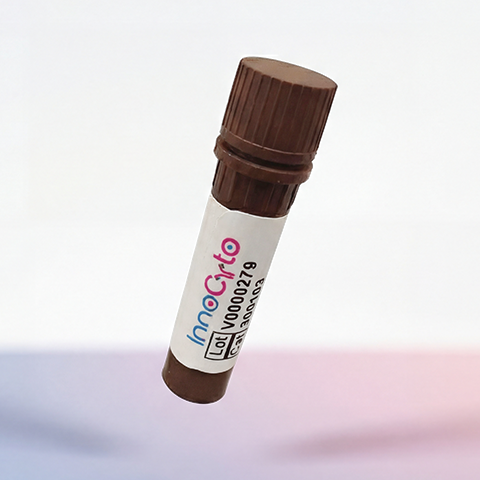
| Cat # | Size | Price | Quantity | |
|---|---|---|---|---|
| 671101 | 10 μg | $190 | ||
| 671102 | 100 μg | $850 |
| Application | Bioassay |
|---|---|
| Format | Lyophilized from sterile PBS, pH 7.4. |
| Expression Host | E.coli |
| Target Name | IL-7, Interleukin 7, Lymphopoietin-1 (LP-1) |
| Species | Mouse |
| accession number | NP_032397.1 |
| Sources | A DNA sequence encoding the mouse IL7 (NP_032397.1) (Glu26-Ile154) was expressed and purified with an initial Met. |
| Molecular Weight | The recombinant mouse IL7 consists of 130 amino acids and predicts a molecular mass of 15 KDa. It migrates as an approximately 18 KDa band in SDS-PAGE under reducing conditions. |
| Affinity Tag | None |
| Purity | ≥95% as determined by SDS-PAGE. |
| Regulatory Status | RUO |
| Endotoxin level | < 1.0 EU per μg protein |
| Protein Concentration | Lyophilized |
| Storage and Handling | Samples are stable for up to twelve months from date of receipt at -20℃ to -80℃. Store it under sterile conditions at -20℃ to -80℃. It is recommended that the protein be aliquoted for optimal storage. Avoid repeated freeze-thaw cycles. |
Mouse interleukin-7 (IL-7) is a key cytokine that supports the development, survival, and maintenance of T lymphocytes and contributes to B-cell development at early stages in mice. Produced primarily by stromal cells in tissues such as the bone marrow and thymus, IL-7 is essential for maintaining immune homeostasis. It promotes lymphocyte survival by regulating anti-apoptotic pathways and supports T-cell proliferation and differentiation, particularly during early development and immune reconstitution.
Mouse IL-7 is a secreted protein encoded by the Il7 gene and belongs to the type I four-α-helix bundle cytokine family. The mature protein adopts a compact helical structure characteristic of this cytokine group. IL-7 exerts its biological activity by binding to a heterodimeric receptor composed of the IL-7 receptor alpha chain (IL-7Rα, CD127) and the common gamma chain (γc, CD132). Receptor engagement activates intracellular signaling pathways, particularly JAK1/JAK3 and STAT5, as well as pathways involved in cell survival, metabolism, and proliferation.
Disrupted IL-7 signaling can contribute to immune dysfunction. Insufficient signaling impairs T-cell development and can lead to severe lymphopenia and compromised immune responses. Conversely, excessive IL-7 activity may support the survival and expansion of certain malignant lymphocyte populations, making the pathway relevant to some lymphoid cancers. IL-7 signaling also influences immune responses during infection, inflammation, and recovery following immune suppression.
Because of its ability to promote T-cell survival and expansion, IL-7 has attracted interest as an immunotherapeutic agent. Recombinant IL-7 has been investigated for enhancing T-cell recovery after chemotherapy, transplantation, or other causes of lymphocyte depletion, and for improving immune responses in selected infectious disease and cancer settings. However, therapeutic applications require careful evaluation because increased IL-7 signaling may also promote unwanted lymphocyte expansion. Mouse IL-7 is widely used in immunology research to study lymphocyte development, cytokine signaling, immune homeostasis, and preclinical immunotherapy strategies.
Recombinant Mouse IL-7 Protein TDS
Have a product or application question? Consult our FAQs or contact us.