| Cat # | Size | Price | Quantity | |
|---|---|---|---|---|
| 806001 | 25 ug | $145 | ||
| 806002 | 100 ug | $295 |
| Application | ELISA, BLI |
|---|---|
| Format | Liquid, Purified |
| Expression Host | CHO |
| Target Name | SECTM1, K12 |
| Species | Human |
| Sources | Recombinant Human SECTM1 (Gln29-Gly145) with C-terminus Fc tag is expressed in CHO cell. |
| Accession Number | Q8WVN6 |
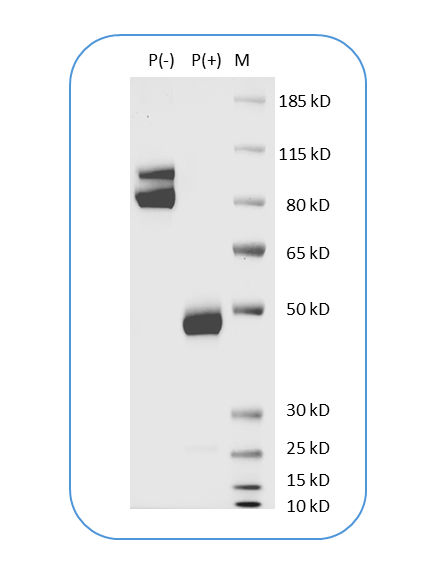
| Molecular Weight | The protein has a predicted molecular weight of 39.0 kDa. Under DTT-reducing conditions, it migrates at approximately 48 kDa on SDS-PAGE. |
| Affinity Tag | C-Fc |
| Purity | >95% based on SDS-PAGE under reducing condition |
| Regulatory Status | RUO |
| Formulation | 1xPBS buffer, pH7.4, 0.22 µm filtered |
| Endotoxin level | Not tested |
| Protein Concentration | 25µg size is bottled at 0.2mg/mL concentration. 100 µg size is supplied at a lot-specific concentration. |
| Storage and Handling | Briefly centrifuge the vial upon receipt. An unopened vial can be stored at 4°C for up to 2 weeks, or at -20°C or below for up to six months. The protein may be further diluted to 0.1 mg/mL using 0.22 µm-filtered PBS buffer (pH 7.4). For long-term storage, the diluted stock solution should be aliquoted and stored at ≤ –70°C to minimize freeze-thaw cycles. If additional dilution is required, carrier proteins such as FBS or BSA should be added to maintain protein stability. |
| Research Areas | T cell Activation, Co-stimulation, Monocytes, Neutrophils |
Secreted and transmembrane protein 1 (SECTM1), also known as K12, is a type I transmembrane and secreted glycoprotein of the SECTM family. It exists in both a ~27 kDa membrane-bound form and a ~20 kDa soluble form, containing two Ig-like domains and an N-linked glycosylation motif at its N-terminus. SECTM1 is primarily expressed in peripheral blood leukocytes, particularly granulocytes, and is also highly expressed in various cancer cells such as melanoma, breast cancer, and leukemia. Its expression can be significantly upregulated by IFN-γ, especially in pathological contexts like thymus disorders. SECTM1 is found in a perinuclear Golgi-like pattern, and while surface expression is often undetectable, it may rapidly be cleaved to form the soluble version. Functionally, SECTM1 is involved in hematopoietic and immune system processes and acts as a natural ligand for CD7. Through its interaction with CD7, SECTM1 promotes T cell activation, proliferation, and cytokine production, enhances monocyte migration via the PI3K pathway, and boosts NK cell activation marker expression. These roles make it a potential target for modulating immune responses in autoimmune diseases, allogeneic transplantation, and IFN-γ–related pathologies.
Human SECTM1 Protein (C-Fc) TDS
Human SECTM1 Protein (C-His-Avi)
Biotin Human SECTM1 Protein (C-His-Avi)
PE Human SECTM1 Protein (C-His)
APC Human SECTM1 Protein (C-His)
Have a product or application question? Consult our FAQs or contact us.