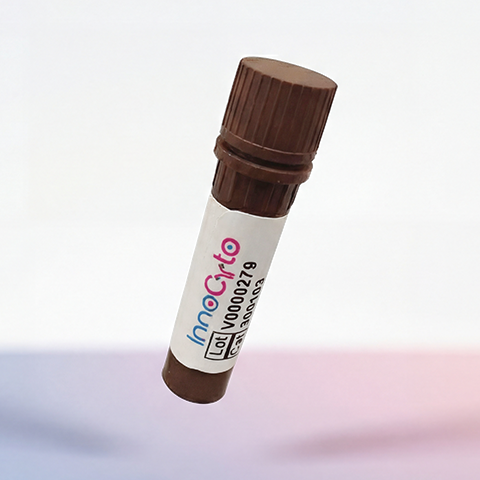
| Cat # | Size | Price | Quantity | |
|---|---|---|---|---|
| 807101 | 25 ug | $245 | ||
| 807102 | 100 ug | $595 |
| Application | Flow Cytometry |
|---|---|
| Format | Liquid, PE |
| Expression Host | CHO |
| Target Name | SECTM1, K12 |
| Species | Human |
| Sources | Recombinant Human SECTM1 (Gln29-Gly145) with C-terminus His-tag is expressed in CHO cell and conjugated to PE. |
| Accession Number | Q8WVN6 |
| Molecular Weight | The protein has a predicted molecular weight of 14.2 kDa. Under DTT-reducing conditions, it migrates at approximately 17-20 kDa on SDS-PAGE prior to conjugation. |
| Affinity Tag | C-His |
| Regulatory Status | RUO |
| Formulation | 1xPBS buffer, pH7.4, 0.09% NaN3 with a carrier protein |
| Endotoxin level | Not tested |
| Protein Concentration | 25µg size is bottled at 0.1mg/mL concentration. 100 µg size is bottled at lot specific concentration. |
| Storage and Handling | Briefly centrifuge the vial upon receipt. An unopened vial may be stored at 2–8°C for up to six months. |
| Research Areas | T cell Activation, Co-stimulation, Monocytes, Neutrophils |
SECTM1 (secreted and transmembrane 1), also known as K12, is a type I transmembrane glycoprotein that functions as an important immunoregulatory molecule in the immune system. SECTM1 serves as the natural ligand for CD7, a surface marker expressed on T cells and natural killer (NK) cells, and plays a crucial role in T cell costimulation and activation. The protein exists in both membrane-bound and soluble forms, with the soluble form generated through proteolytic cleavage or alternative splicing. SECTM1 is expressed on activated monocytes, dendritic cells, and certain epithelial cells, where it participates in immune cell interactions and inflammatory responses. Upon binding to CD7, SECTM1 delivers costimulatory signals that enhance T cell proliferation, cytokine production, and effector functions.
Structurally, SECTM1 is a glycoprotein of approximately 30-35 kDa consisting of an extracellular domain, a transmembrane region, and a short cytoplasmic tail. The extracellular domain contains the CD7-binding region and is heavily glycosylated, which influences its stability and binding properties. The protein can be cleaved by metalloproteases to release a soluble form that retains CD7-binding activity and can function as a paracrine signaling molecule. The membrane-bound form is anchored to the cell surface and mediates direct cell-cell interactions, while the soluble form can act at a distance to modulate immune responses.
The primary and best-characterized ligand interaction for SECTM1 is with CD7 on T cells and NK cells. This SECTM1-CD7 interaction is critical for immune cell activation and has been shown to enhance antitumor immunity. SECTM1 may also interact with other immune receptors, though CD7 remains its principal binding partner. The protein's expression is upregulated during immune activation and inflammation, suggesting a role in amplifying immune responses during infection or tissue damage.
In disease contexts, SECTM1 expression patterns have implications for cancer immunology and autoimmunity. Reduced SECTM1 expression in the tumor microenvironment may contribute to immune evasion by limiting T cell costimulation. Conversely, enhanced SECTM1 expression or administration could potentially boost antitumor immunity. Therapeutically, the SECTM1-CD7 axis is being exploited in novel immunotherapy approaches. K12/SECTM1-based chimeric antigen receptor (CAR) T cells are under development for treating CD7-positive hematologic malignancies, particularly T cell acute lymphoblastic leukemia (T-ALL) and peripheral T cell lymphomas. This approach leverages the natural SECTM1-CD7 interaction to create CAR-T cells that can target CD7-expressing tumor cells while potentially reducing fratricide effects compared to conventional anti-CD7 CAR-T therapies. Additionally, recombinant SECTM1 or SECTM1-based fusion proteins are being investigated as immune adjuvants to enhance T cell responses in cancer immunotherapy and vaccine development.
PE Human SECTM1 Protein (C-His) TDS
Human SECTM1 Protein (C-His-Avi)
Biotin Human SECTM1 Protein (C-His-Avi)
APC Human SECTM1 Protein (C-His)
Have a product or application question? Consult our FAQs or contact us.